The Rule of 72
Step-by-Step Guide to Understanding the Rule of 72
How to Calculate the Rule of 72
The Rule of 72 estimates the time needed to double the value of an investment.
The Rule of 72 is a convenient method to estimate the approximate time for invested capital to double in value.
By merely taking the number 72 and dividing it by the rate of return (or interest rate) expected to be earned, the output is the approximate number of years for an investment to double.
Therefore, the Rule of 72 is a “back of the envelope” estimate of the time to double an investment, yet the method produces a relatively accurate figure.
On that note, using Excel (or a financial calculator) is recommended for a more precise figure, especially in higher stake circumstances.
The Rule of 72 is well-known in finance and is perceived by most as a general rule of thumb to estimate the number of years that it would take an investment to double in value.
Yet, despite the simplicity of the calculation and convenience, the methodology is rather accurate, within a reasonable range.
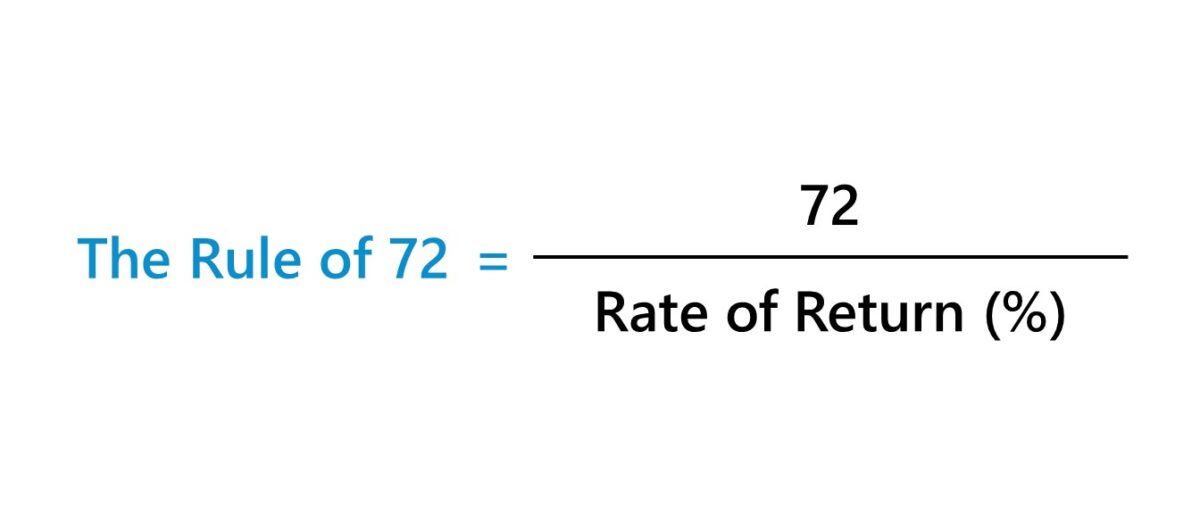
The formula for the Rule of 72 divides the number 72 by the annualized rate of return (i.e. the interest rate).
Number of Years to Double = 72 ÷ Interest Rate (%)
Thus, the implied number of years for the investment’s value to double (2x) can be approximated by dividing the number 72 by the effective interest rate.
However, the effective interest rate used in the equation is not in percentage form.
Illustrative Rule of 72 Example
For example, if an investor – i.e. a limited partner (LP) of the fund — decided to contribute $200,000 to an active investor’s fund.
According to the firm's marketing documents, the normalized return should range around 9% approximately, i.e. the 9% is the set return targeted by the fund’s portfolio of investments over the long term (and various economic cycles).
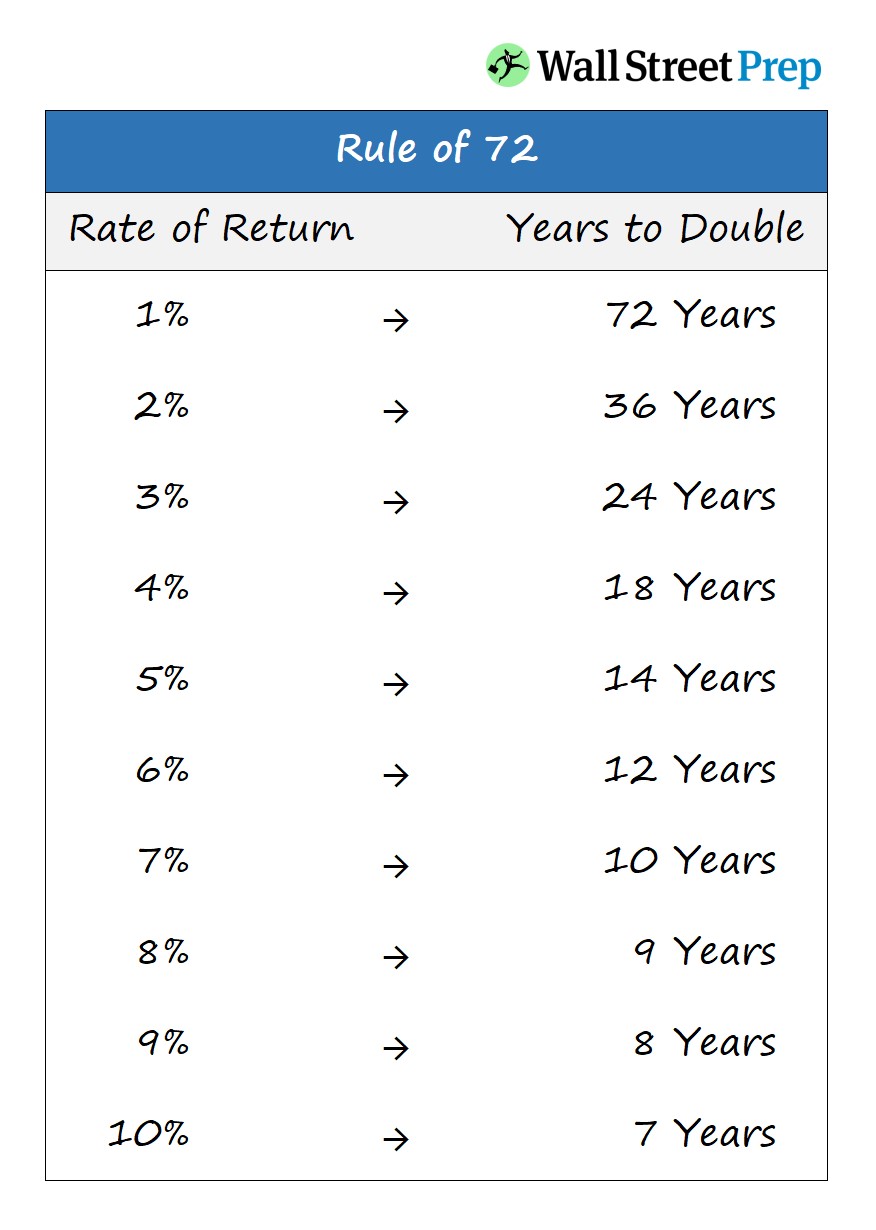
If we assume the 9% annual return is in fact achieved, the estimated number of years for the original investment to double in value is roughly 8 years.
- Number of Years to Double (n) = 72 ÷ 9 = 8 Years





Rule of 72 formula offer you to have simple calculation where you can solve your equation of doubling the investment time period.
Yes, the Rule of 72 allows you to estimate the amount of time it will take to double by dividing by the rate of return.
You can also estimate the IRR by using the Rule of 40M, where the IRR is [40 * M / No. of Years]. Find out more: https://www.youtube.com/watch?v=aCHFgOCX1hU