What is Upsell Rate?
The Upsell Rate is the proportion of upsell revenue generated relative to a company’s total revenue, expressed as a percentage.

The Upsell Rate is the proportion of upsell revenue generated relative to a company’s total revenue, expressed as a percentage.
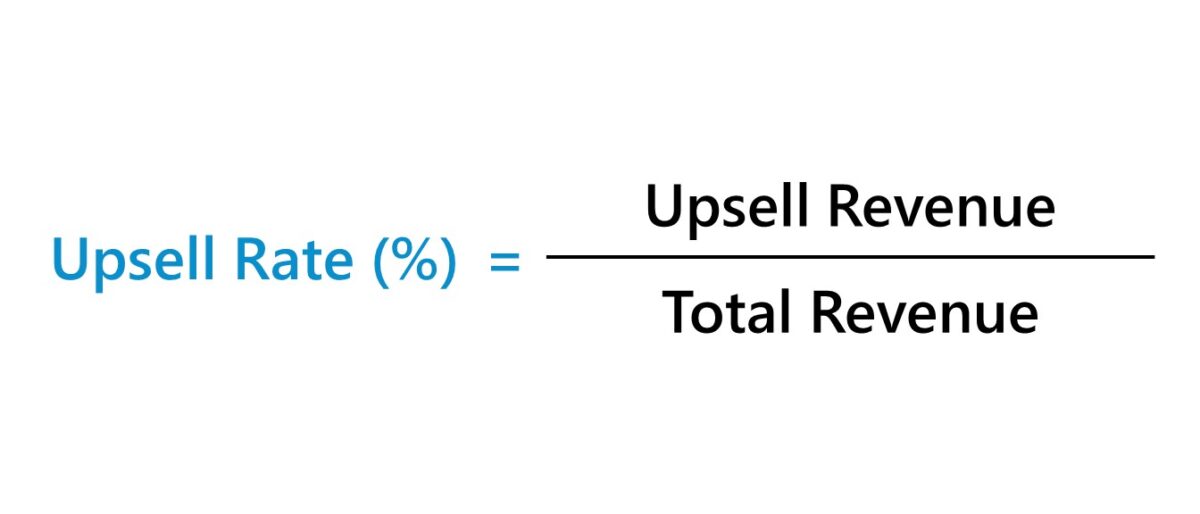
The upsell rate measures the percentage of a company's total revenue that stems from upselling, which refers to tactics used to increase the total amount spent by customers.
Since selling a product or service to an existing customer, or a customer on the verge of completing a purchase, tends to be far easier than selling to a new customer, companies attempt to capitalize on existing customers via upselling.
Therefore, the upsell revenue derived from existing customers that have already purchased an item – i.e. the incremental revenue in excess of the baseline revenue prior to the upsell – is perceived to be an easier method of bringing in more recurring revenue, as well as building customer loyalty.
The process of calculating the upsell rate can be broken into three steps:
The formula to calculate the upsell rate, expressed in terms of revenue, is as follows.
The upsell rate on a revenue basis is determined by the incremental revenue from each upsell (i.e. it excludes the base revenue).
The upsell rate can also be expressed in terms of customers using the following formula.
Unlike the revenue upsell rate, the customer upsell rate is more comparable to a conversion rate, as opposed to quantifying the proportion of revenue attributable to upselling tactics.
Learn how institutional investors identify high-potential undervalued stocks. Enrollment is open for the upcoming cohort.
The Premium Connectivity package offered by electric vehicle automaker Tesla (NASDAQ: TSLA) is an example of upselling, where accessing additional features comes at an incremental cost billed on a monthly subscription basis.
While Standard Connectivity comes with basic features like map navigation, Premium Connectivity enhances the driver experience by offering other features such as providing live traffic navigation, sentry mode, satellite-view maps, and access to an internet browser.
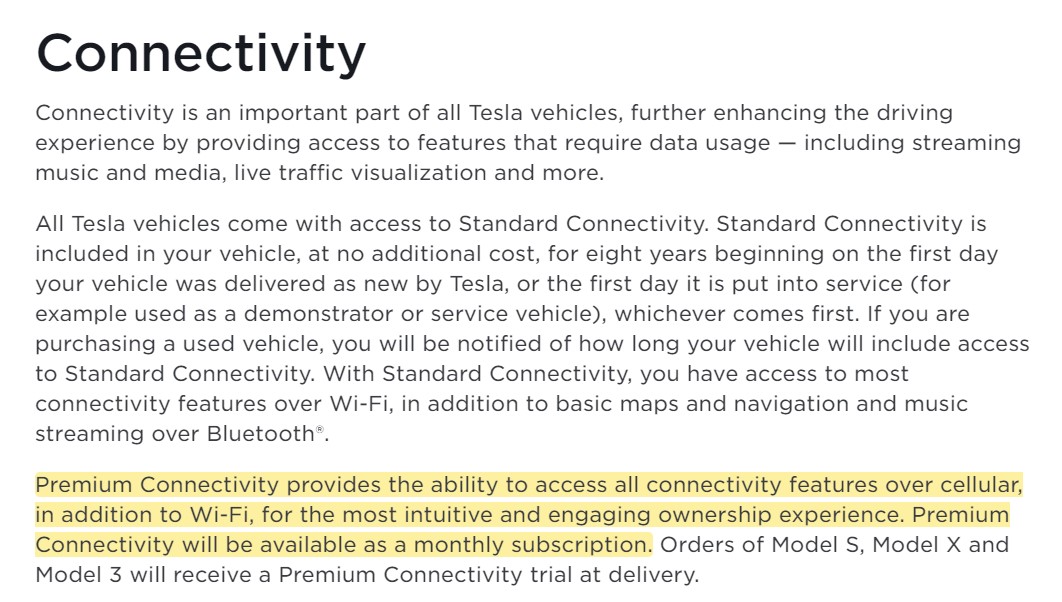
Tesla Upsell Example (Source: Tesla Support)
We’ll now move on to a modeling exercise, which you can access by filling out the form below.


Suppose you’re tasked with calculating the upsell rate of a consumer electronics company that sells phones.
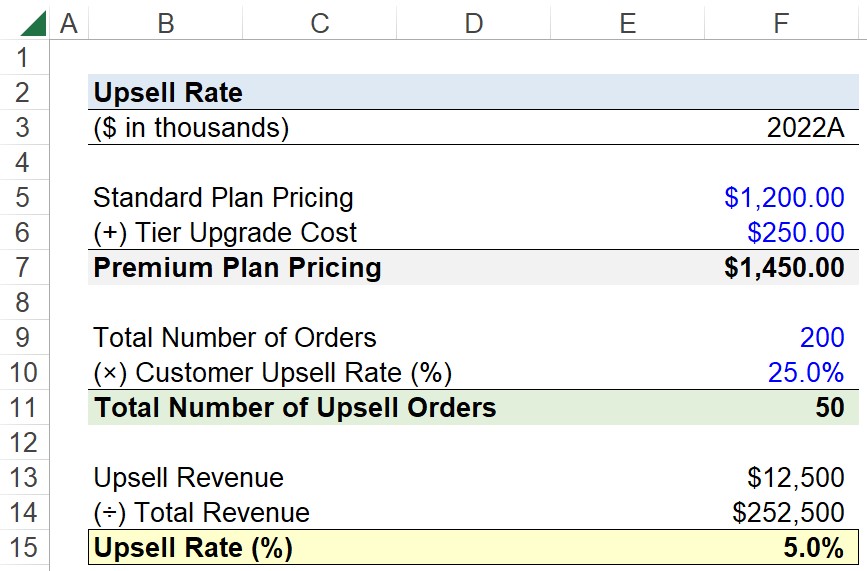
The pricing of the company's core product is $1,200.00, but in an effort to increase their total revenue and average order value (AOV), the company decided to introduce a higher tier plan in 2022.
The optional upgrade to the premium plan is priced at $250, with the add-on benefits consisting of an extended product warranty, increased cloud storage for photos and videos, and more features related to interconnectivity (e.g. integration with other 3rd party music and media streaming applications).
As a reward for their loyalty and decision to upgrade to the higher tier plan, customers also receive early access to new internal software updates before other customers that chose to remain on the standard plan.
In 2022, the total number of customer orders was 200,000, with a customer upsell rate of 25.0%, i.e. the conversion rate in convincing existing customers to upgrade.
The total number of upsell orders can be determined by multiplying the total number of orders by the customer upsell rate, which comes out to be 50,000.
Using the figures that we've calculated thus far, the total revenue generated in 2022 can be computed by multiplying the pricing of each plan by the corresponding number of customers under the plan.
The upsell revenue is the incremental revenue derived from existing customers, so we can subtract the standard plan pricing from the premium plan pricing to determine the upsell revenue per order.
In the final step, we'll multiply the tier upgrade cost ($250.00) by the total number of customer orders with an upsell conversion (50,000) to arrive at $12.5 million as the incremental upsell revenue, which implies a 5.0% upsell rate on a revenue basis.


No comments yet.