What is Physical Occupancy?
Physical Occupancy measures the number of vacant units in a real estate property, relative to the total number of units in the rental property, expressed as a percentage.

Physical Occupancy measures the number of vacant units in a real estate property, relative to the total number of units in the rental property, expressed as a percentage.
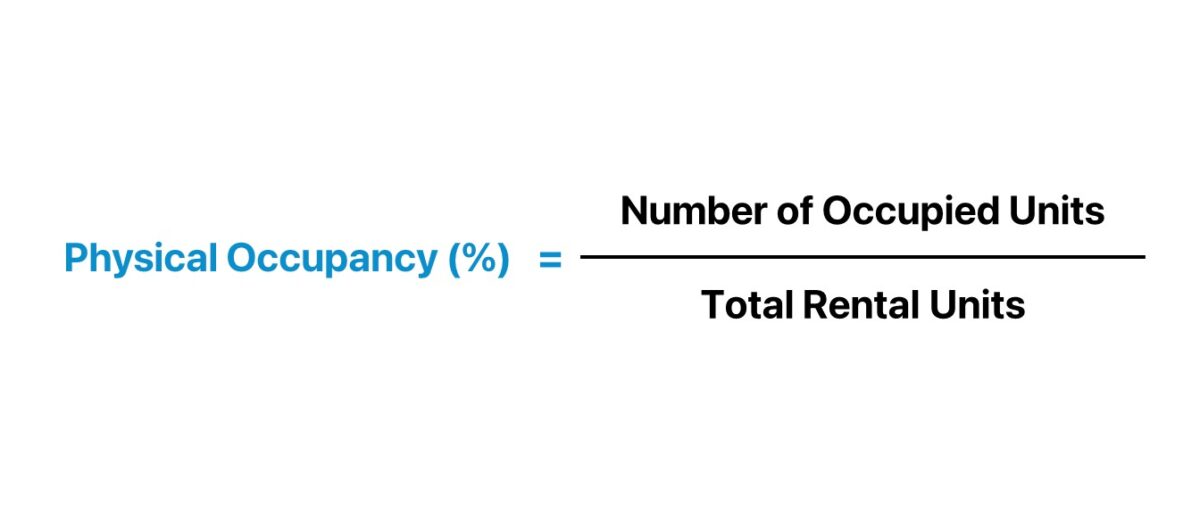
In commercial real estate (CRE), the physical occupancy measures the percentage of occupied units (i.e. non-vacant) in a rental property over a specified time period.
The physical occupancy rate is a critical measure to analyze for real estate investors and other market participants, such as commercial lenders and underwriters.
So, why does the physical occupancy rate matter?
The physical occupancy rate, or percentage of occupied units with tenants, determines the rental income generated by a rental property.
The maximization of rental income – i.e. closing the “gap” between actual and potential rental income – has broad implications for meeting the target return (or yield) on an investment property, including being able to secure loans with favorable financing terms from lenders.
On that note, the rental income of a property is contingent on the physical occupancy rate, which should be intuitive, since only units occupied by tenants generate rental income on behalf of the property owner.
Therefore, if a commercial building has a significant percentage of vacant units, the property owner (or landlord) is missing out on more potential rental income.
The losses in reference here, however, refer to the foregone, unrealized rental income, so there are no tangible monetary losses incurred, aside from routine maintenance costs (e.g. cleaning) and marketing spend.
The process to calculate the physical occupancy rate comprises four steps:


The formula to calculate the physical occupancy rate is as follows.
Where:
The deviation between the historical occupancy rate – assuming there is sufficient data available for comparability – and the projected occupancy rate should be marginal, unless significant capital improvements were recently made to justify the validity of the pro forma figures.
The physical occupancy rate and vacancy rate are two sides of the same coin, i.e. inverse metrics.
With that said, an alternative method to compute the physical occupancy rate is by subtracting the physical vacancy rate from one.
Where:
The vacancy rate is calculated by dividing the number of vacant units by the total units.
Level up your real estate investing career. Enrollment is open for the upcoming Wharton Certificate Program cohort.
To maximize the rental income of a rental property (and increase the return on investment, or “ROI”), property owners and real estate investors must effectively manage the occupancy rate.
There are two types of occupancy rate metrics to pay close attention to, and optimize around, to produce the most rental income feasible.
Unlike the economic occupancy, the physical occupancy only tracks the percentage of unoccupied rental units, while disregarding factors such as the following:
The economic occupancy is therefore a method to measure the rental income (and profitability) attributable to a particular rental property on a more granular level, whereas the physical occupancy is a metric to track the percentage of occupied units (and is a “ballpark” estimate of rental income).
The common strategies to optimize the physical occupancy rate (and minimize vacancies) are as follows.
If the percentage of unit vacancies is a troubling matter, there are likely underlying issues with the property, causing potential tenants to be reluctant to sign a lease, such as negative reviews and poor reputation.
As a real-world example, concessions in New York City (NYC) in the residential market at the onset of the COVID-19 pandemic were substantial in response to the trend of work-from-home (WFM), as unit vacancies were rising since employees were not obligated to come into the office.
But once employers started to mandate their employees to physically be at the office, either all the time or for a minimum number of hours per week, the residential market soon shifted into a "seller's market".
In effect, the pricing of residential rental properties increased substantially, while rental concessions practically disappeared due to the renewed abundance of market demand.
However, the commercial real estate market (CRE) has not recovered like the residential real estate market in NYC. In fact, the amount of concessions for Class A properties in Manhattan equated to a staggering ~24% of the total rent across the entire lease term as of mid-2023.
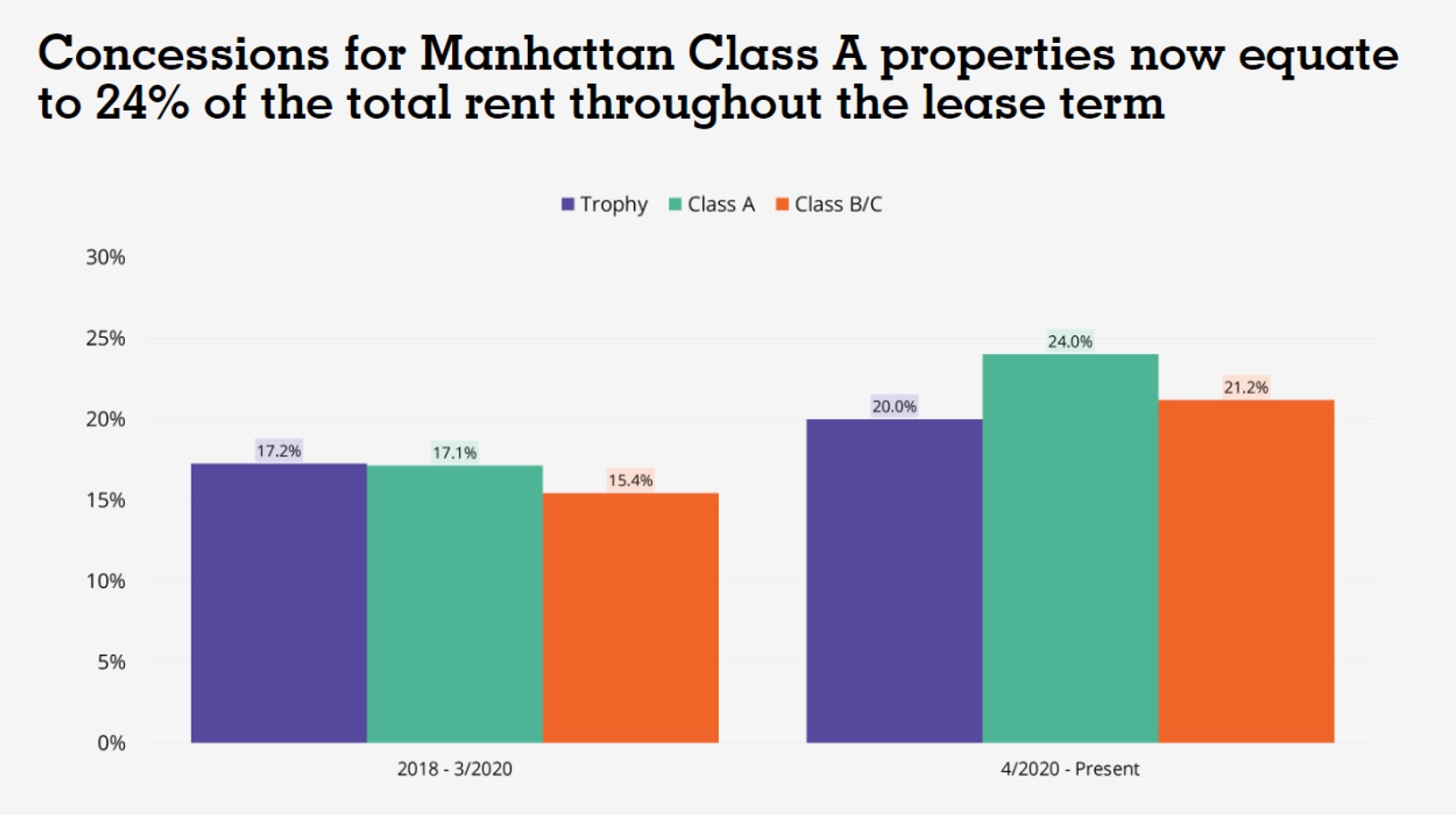
Concessions for Manhattan Class A Properties (Source: Avision Young)
The higher the physical occupancy rate, the more rental income earned by an investment property – all else being equal.
We’ll now move to a modeling exercise, which you can access by filling out the form below.

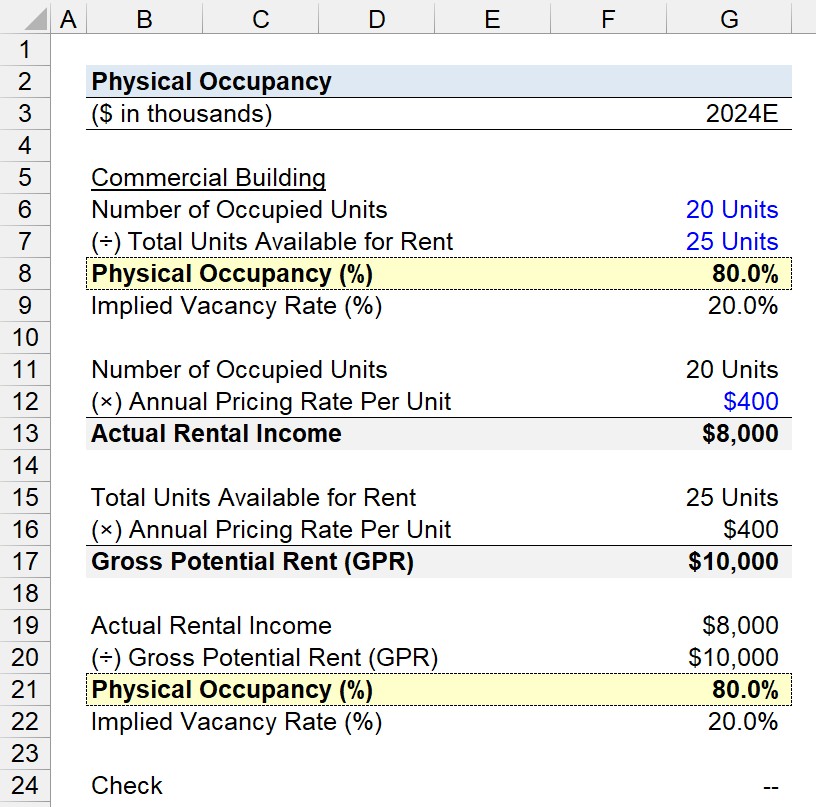
Suppose we’re tasked with calculating the physical occupancy rate of a commercial building, given the following pro forma figures for 2024E.
Commercial Building (CRE)
The physical occupancy rate is determined by dividing the number of occupied units by the total number of units available for rent, which comes out to 80%.
In the next part of our exercise, we’ll assume the annual pricing rate per unit is $400k (or approximately $33.3k per month).
The gross potential rent (GPR) here neglects ancillary income (i.e. side income sources), total concessions, turnaround times in tenant move-in and move-out dates, and other adjustment factors – and is the product of the annual pricing rate per unit and the total number of units available for rent.
The $10 million represents the maximum rental income that the commercial building could generate.
However, the rental income figure is more of a “back-of-the-envelope” calculation because of the omitted factors mentioned earlier.
In comparison, the actual rental income of the commercial building is $8 million, which we determined by multiplying the number of occupied units by the annual pricing rate per unit.
The physical occupancy rate can be derived by dividing the actual rental income by the gross potential rent (GPR), which is 80%, confirming our prior calculation is correct.


No comments yet.