What is a Sale Leaseback?
A Sale Leaseback is a transaction where the owner sells a property to a buyer, but soon afterward signs a new lease with the new owner.

A Sale Leaseback is a transaction where the owner sells a property to a buyer, but soon afterward signs a new lease with the new owner.
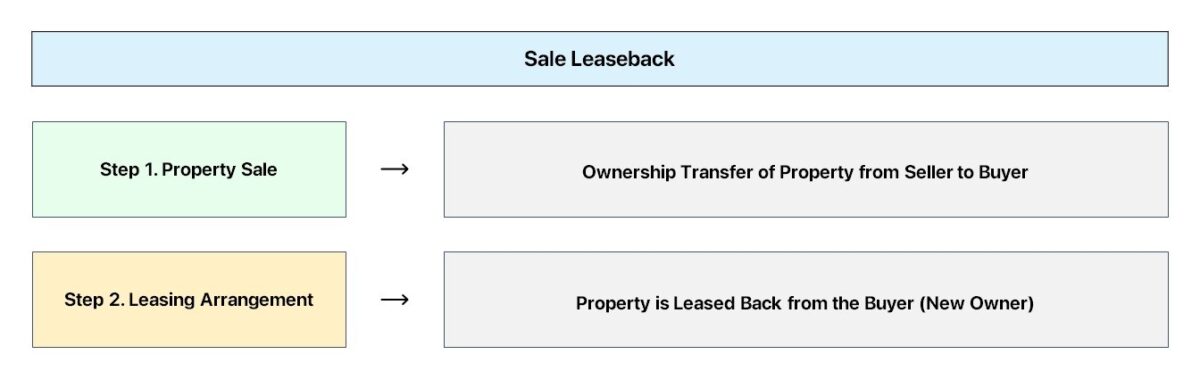
In commercial real estate (CRE), a sale leaseback occurs when the seller of a property immediately commits to a leasing agreement with the buyer.
In a sale leaseback, or “leaseback,” for short, the seller and buyer engage in a mutually beneficial transaction, in which the prior owner sells the property (“cash-out”) to the new owner, but continues to use the property after committing to a new leasing arrangement.
The structure of a sale-leaseback transaction comprises two parts.
| Leaseback Stages | Description |
|---|---|
| Stage 1 → Property Sale Contract |
|
| Stage 2 → Leasing Contract |
|
From the perspective of the new owner (i.e. the buyer), the ownership of the property is formally transferred to themselves upon transaction close.
In sale-leaseback transactions, the buyer profile is often a real estate investor who purchased the property to generate rental income, rather than to move into and live in the property (i.e. the property is an investment, as part of the investor’s portfolio).
Notably, the real estate investor (or buyer) acquires a controlling interest in a stabilized property with a long-term tenant in place, i.e. an immediate, recurring income source.
On that note, the seller (pre-sale) is settled into the property and likely needs to continue utilizing the space.
However, there are often scenarios where a leaseback agreement is more economically sensible, such as when the prior owner’s cash reserves are running low (and they are in urgent need of cash injection).
So, what are the benefits received by the seller in a sale and leaseback?

The benefits and drawbacks of a sale leaseback transaction to the seller (or former owner) are as follows.
| Seller Pros/Cons | Description |
|---|---|
| Capital Raise |
|
| Favorable Market Conditions |
|
| Business Continuity |
|
| Loss of Ownership (Control) |
|
| Conditional Provisions |
|
Level up your real estate investing career. Enrollment is open for the upcoming Wharton Certificate Program cohort.
In contrast, the advantages and disadvantages of a sale leaseback transaction to the buyer (or new owner) are as follows.
| Buyer Pros/Cons | Description |
|---|---|
| Transfer of Ownership |
|
| Triple Net (NNN) Lease |
|
| Alleviated Risks in Turnaround Period |
|
| Financial Return |
|
| Locked-In Interest Rate |
|
| Potential Losses |
|
| Shortage of Market Demand |
|
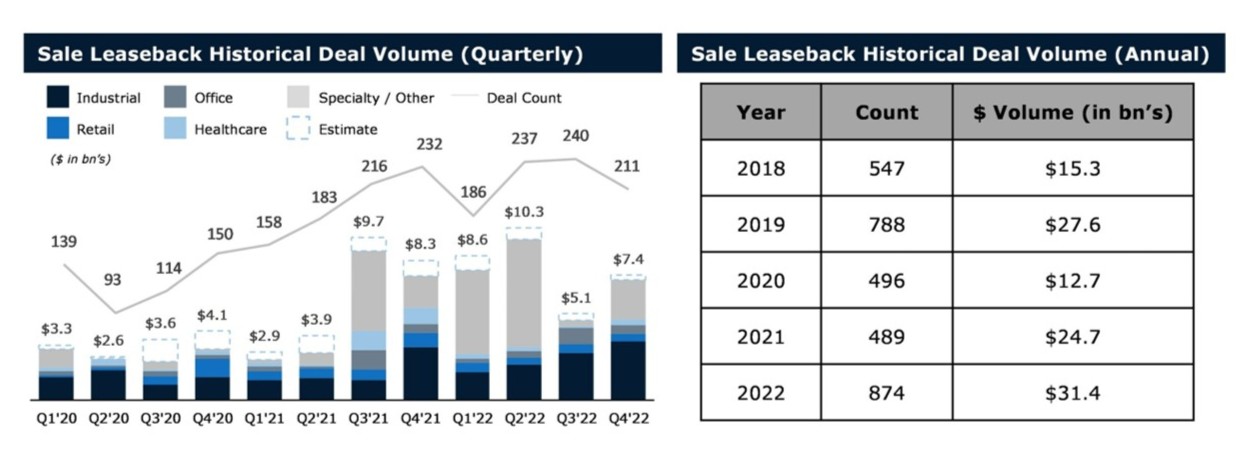
2023 Sale Leaseback Outlook Source: SLB Capital Advisors)
Suppose a commercial real estate (CRE) investment firm is interested in acquiring an office building property.
The commercial office building belongs to an owner with an established track record, strong credit profile, and significant leasehold improvements (LI).
In conclusion, our hypothetical scenario illustrates how the commercial real estate investor secures a long-term contractual leasing arrangement via a sale leaseback transaction, where the interests of both sides are met.


No comments yet.