What is Fair Market Value?
The Fair Market Value (FMV) refers to the current price that interested buyers in the open market are willing to pay to purchase a certain asset, such as property.

The Fair Market Value (FMV) refers to the current price that interested buyers in the open market are willing to pay to purchase a certain asset, such as property.
The fair market value (FMV) is the price set by the open market at which an asset could be sold (or purchased).
Since investors and buyers in the open markets are emotional decision-makers with cognitive biases, the fair value of assets fluctuates constantly.
The fair value of an asset is the price it’ll sell for in an open, competitive market whereby the seller and buyers all have adequate information with no external factors like time impacting their decision-making.
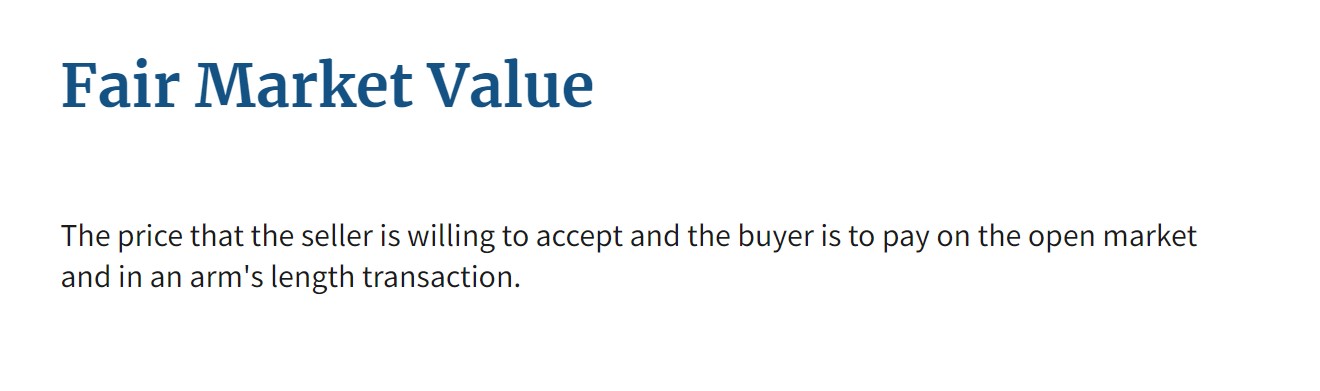
Fair Market Value Definition (Source: FEMA.gov)
Two underlying assumptions for the fair value estimation are that the buyer and seller are both:
To provide specific examples, a seller in a distressed scenario divesting assets can often accept lower prices for the sake of convenience and time (i.e. a “fire sale”).
Despite the fact that the seller could likely receive a higher bid if given more time, quick sales of assets and receiving cash (i.e. urgent liquidity) could be prioritized above selling at the fair value of the asset.
For the second assumption, all material information of relevance should be shared on both sides. In other words, there should be no hidden information that could lead to a party underpaying or overpaying for the asset (e.g. defects).
On the date of transaction close, there should be a mutual agreement between the buyer and seller, who are both acting in their self-interests.

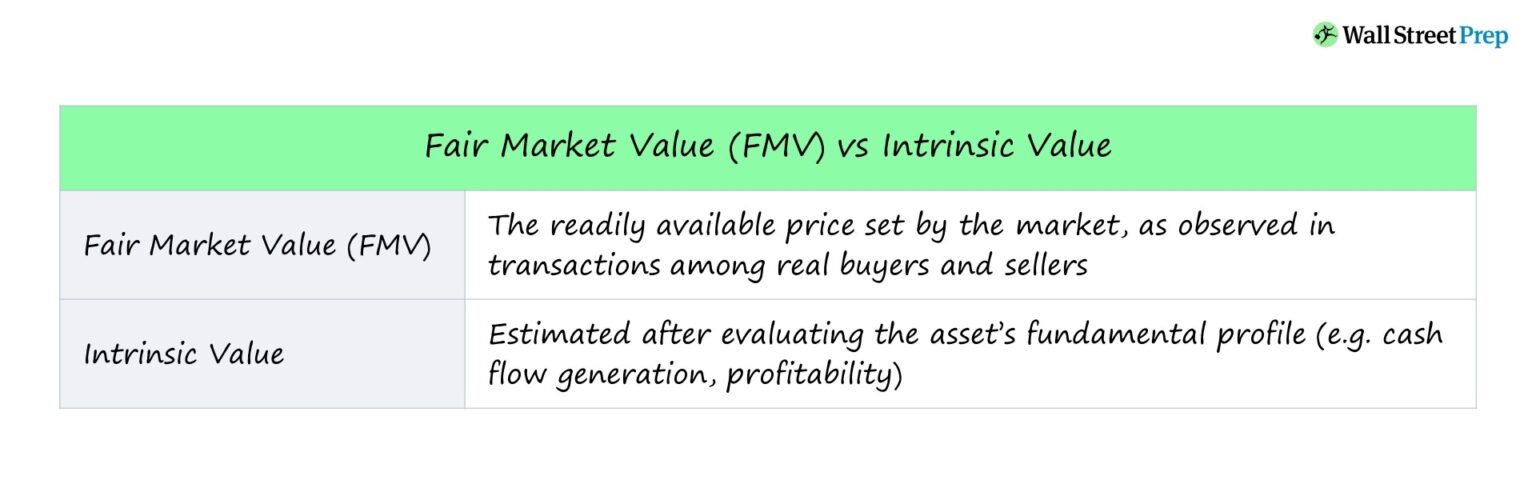
The concept of intrinsic value and fair market value (FMV) are similar, however, the fair value is determined by participants in the open markets, i.e. "supply and demand".
As a simple example, if you’re selling a used car, the highest bid received from a buyer is the fair market value (FMV), as long as the two aforementioned criteria are sufficiently met.
Likewise, if you're selling a real estate property, such as a commercial building, your objective is to find a buyer willing to meet (or exceed) the asking price.
If the asking price to sell the property is priced too high, it’ll sit on the market for a longer duration, but the probability of finding the highest-paying buyer increases (and vice versa).
Thus, estimating the fair market value of the property ahead of time can help in setting the pricing appropriately, so that the following two factors are balanced:
On a related note, the amount of real estate taxes owed post-sale is based on the fair value of the property.
Level up your real estate investing career. Enrollment is open for the upcoming Wharton Certificate Program cohort.


No comments yet.