What is EBITDAR?
EBITDAR is a non-GAAP measure of operating profitability prior to capital structure decisions, tax rates, non-cash expenses like D&A, and rent costs.

EBITDAR is a non-GAAP measure of operating profitability prior to capital structure decisions, tax rates, non-cash expenses like D&A, and rent costs.
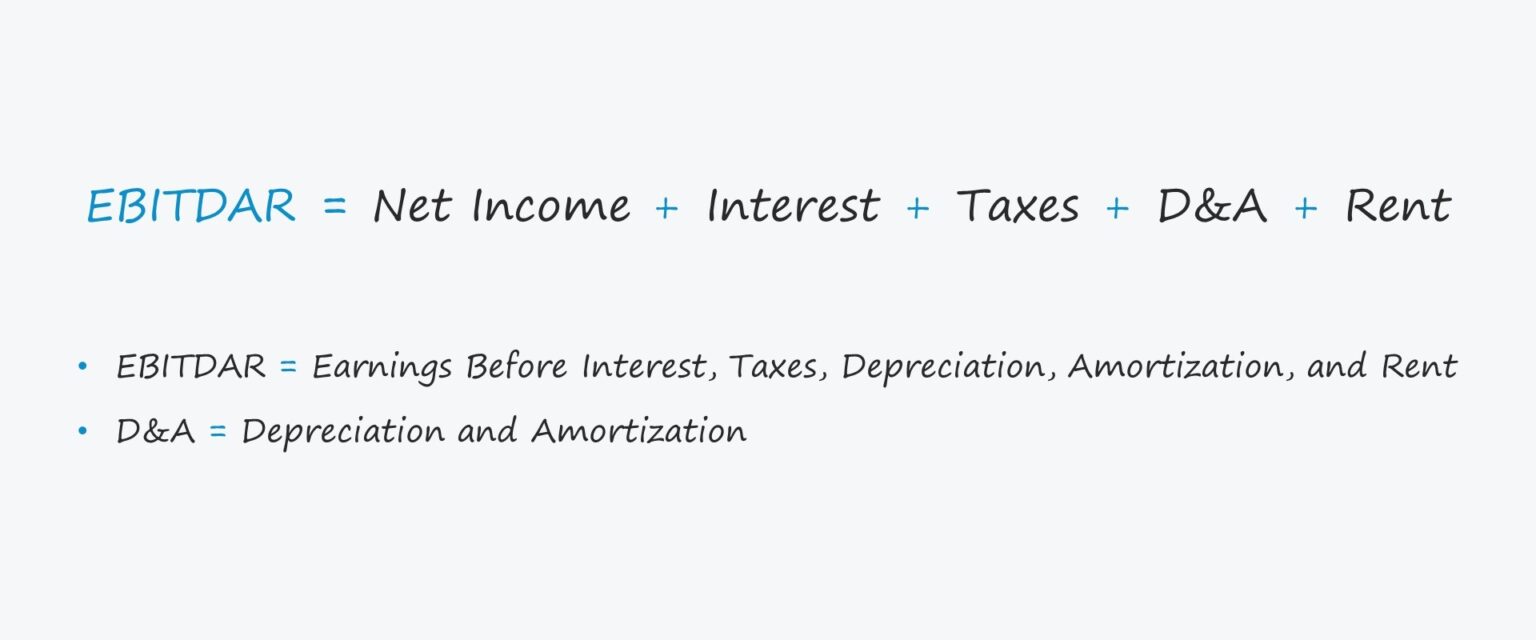
EBITDAR is an abbreviation for Earnings Before Interest, Taxes, Depreciation, Amortization, and Rent.
In practice, EBITDAR is used to measure the financial performance of companies with abnormally high rent costs.
EBITDAR is independent of the capital structure (i.e. unaffected by financing decisions), the tax structure, and non-cash items (e.g. depreciation, amortization), just like EBITDA.
However, for EBITDAR, the effects of rent costs are also removed.
So, why should the impact of rental costs be removed?
The rent costs incurred by companies are removed in EBITDAR to allow for more accurate comparisons between them. The following should also be removed:
More specifically, rent costs are location-dependent and impacted by the circumstances around the particular rental (e.g. competitiveness of real estate market, relationships).
The first step to calculating EBITDAR is to calculate EBITDA, which is perhaps the most frequently used measure of operating profitability.
There are numerous methods to calculate EBITDA:
Normalized operating expense include SG&A and R&D, but exclude D&A.
Each formula is conceptually the same, so it does not matter which method is taken.
The difference between the EBITDA and EBITDAR metrics is that the latter also excludes rent costs, plus any non-recurring items such as restructuring charges.
We’ll now move to a modeling exercise, which you can access by filling out the form below.


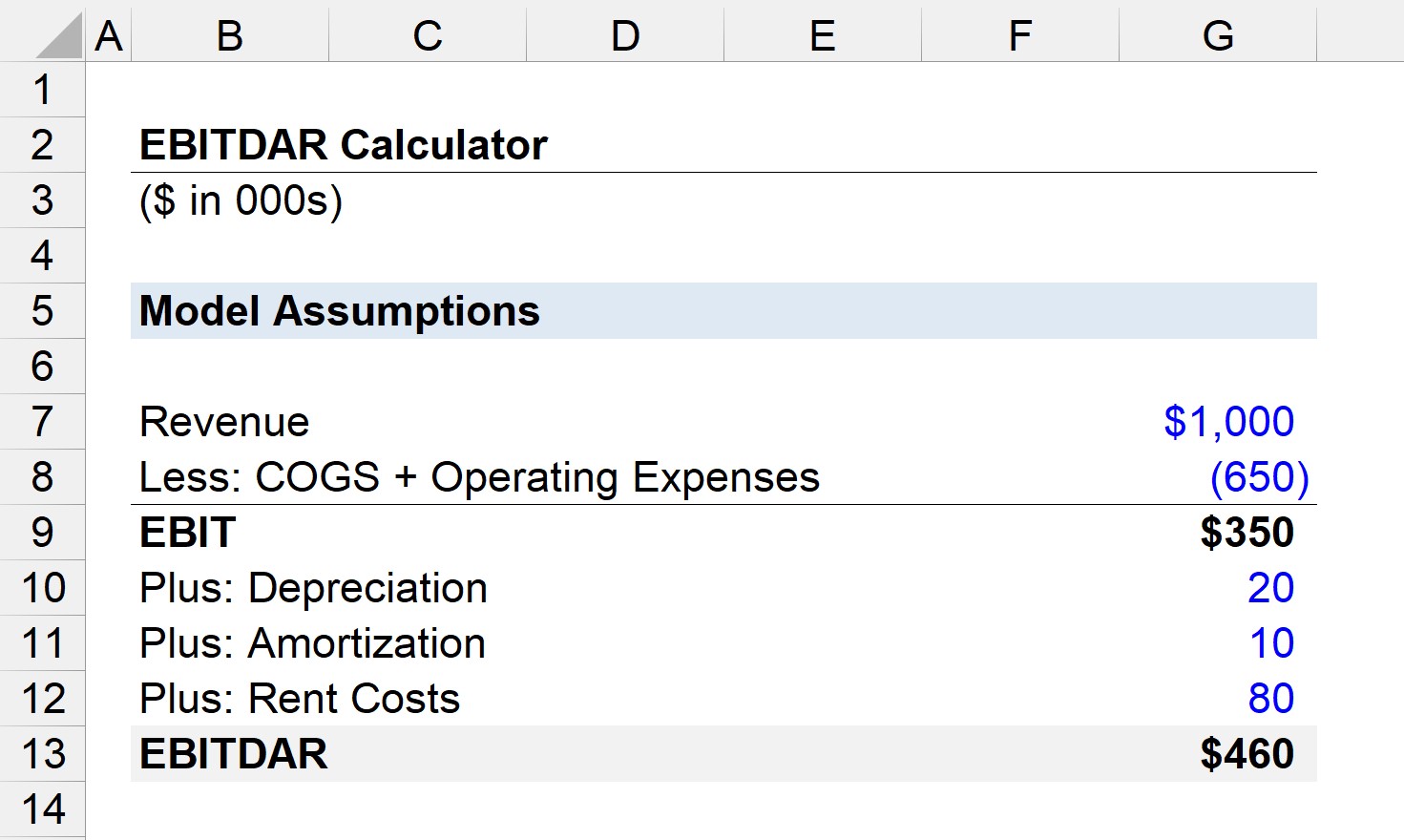
Suppose a company generated $1 million in revenue the past fiscal year with $650,000 in total operating expenses, i.e. the sum of cost of goods sold (COGS) and operating expenses (OpEx).
Upon deducting the operating expenses from revenue, we arrive at $350,000 for EBIT, also known as operating income.
As implied by the name, neither interest nor taxes are accounted for yet in the EBIT metric.
Next, let’s assume that embedded within operating expenses are:
If we add D&A and rent costs back to EBIT, the resulting EBITDAR is $460,000.
EBITDAR is most prevalent in industries with unusually high rent expenses that differ from company to company, i.e. are dependent on discretionary choices by management (i.e. location, building size).
| Industry | Examples |
|---|---|
| Hospitality |
|
| Retail |
|
| Transportation and Aviation |
|
The “rent” in EBITDAR does not necessarily refer to just property or land.
For example, the aviation industry is also known for frequently using EBITDAR.
Under this context, the profit metric compares the operating results of different airlines with the effects of aircraft rental costs removed.
Why? The rental costs vary by each airline because of the different methods used to finance the purchase and maintenance of fleets.
We can see the calculation of EBITDAR, as well as the excluded expenses from the non-GAAP income statement, from easyJet’s annual report below.
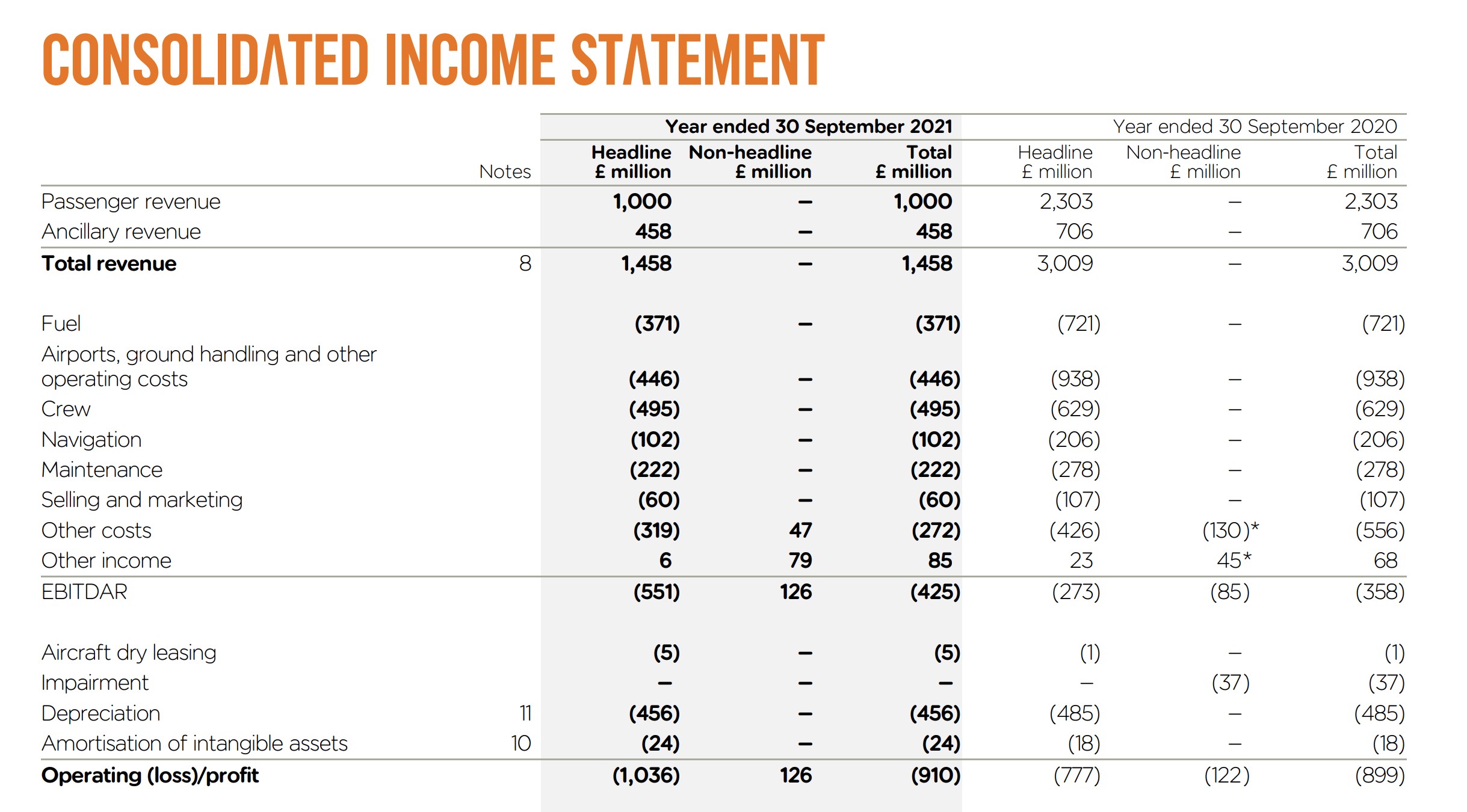
easyJet Consolidated Non-GAAP Income Statement (Source: Annual Report)
As another industry example, the most frequently used valuation multiple in the hospitality industry is enterprise value to EBITDAR.
There is no standardized method for operating hotel properties, as some are the actual owners while others maintain business models oriented around leasing, management, or franchising.
Therefore, the differences can skew the financial results of these sorts of companies, especially for capital expenditure (Capex) needs.
For instance, the hotel companies that lease their assets typically have artificially lower debt and operating income compared to competitors that own their assets, i.e. the lease financing is “off-balance-sheet.”
Instead of appearing on the balance sheet of the lessee (i.e. holder of the lease), it remains on the balance sheet of the lessor (i.e. the owner of the asset being leased).
Additionally, only the rental expense is recorded on the income statement of the lessee.
Often off-balance-sheet financing can also artificially keep leverage ratios low, which is why the metric can be used for leverage ratios and coverage ratios too.
Unlike metrics such as operating income (EBIT) and net income, EBITDAR is non-GAAP and impacted by discretionary management decisions on which items to add back or remove.
As a non-GAAP metric, EBITDAR can be (and typically is) adjusted for non-recurring items, most notably restructuring expenses, similar to “adjusted EBITDA.”
The drawbacks to EBITDAR are virtually identical to the criticism surrounding EBITDA, namely the failure to account for capital expenditures (Capex) and the change in net working capital (NWC).
EBITDA and EBITDAR are prone to inflating the performance of asset-heavy companies and depicting their balance sheet as healthier than in reality.
Like EBITDA, EBITDAR is less appropriate for companies with different levels of capital intensity.

Enroll in The Premium Package: Learn Financial Statement Modeling, DCF, M&A, LBO and Comps. The same training program used at top investment banks.


Hello, Great article ! I just have a minute doubt that shouldn’t Ebitda,ebit, Ebita,ebitdar ,etc be considered a measure of operating performance and not financial performance because it doesn’t consider the impact of debt financing?
Hi, Samiksha,
That is correct, they are all indicators of operating performance independent of financing.
BB