What is LTM EBITDA?
LTM EBITDA is a company’s earnings before interest, taxes, depreciation, and amortization across the trailing twelve months.

LTM EBITDA is a company’s earnings before interest, taxes, depreciation, and amortization across the trailing twelve months.
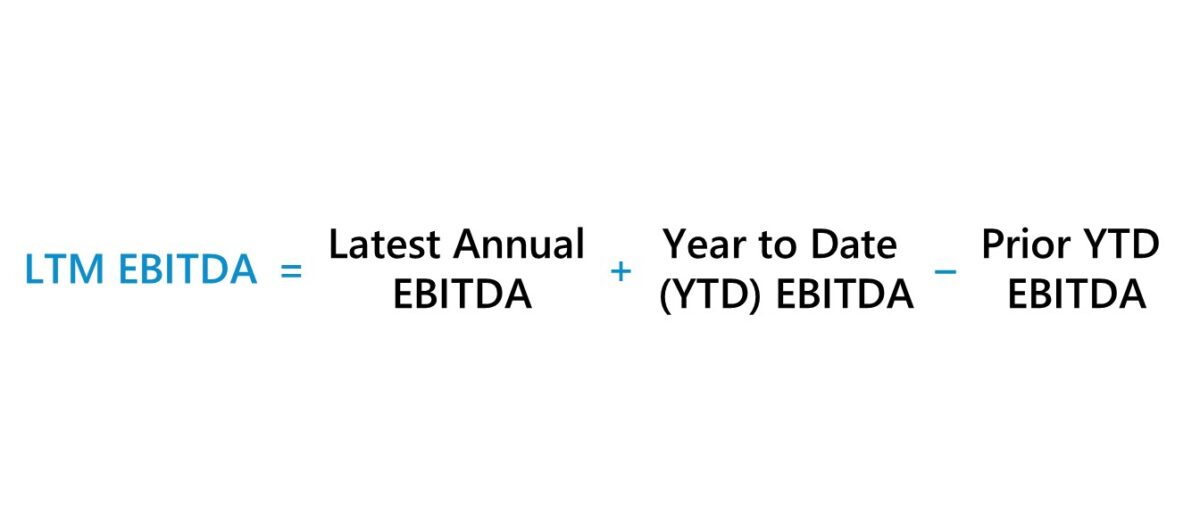
The LTM EBITDA metric refers to a company’s EBITDA as of the most recent four quarters, i.e. the last 12-month period.
EBITDA is a non-GAAP metric that measures a company’s core operating cash flows. At its simplest form, a company's EBITDA is equal to the sum of its operating income (EBIT) and D&A.
Below are the steps to calculate a company’s LTM EBITDA:
The formula for calculating LTM EBITDA is as follows.
The operating income (EBIT) of a company is a line item on the income statement, whereas the full D&A expense can be found on the cash flow statement (CFS).
Level up your career with the world’s most recognized private equity investing program. Enrollment is open for the upcoming cohort.
The usage of LTM EBITDA tends to be most common in M&A transactions, such as a leveraged buyout (LBO). For example, the purchase multiple in an LBO can be based on the acquisition target’s LTM EBITDA.
While negotiating the purchase multiple, the buyer and seller want the earnings metric that the purchase multiple is based upon to reflect the company’s most recent performance. Otherwise, the purchase price would not be based on the current financial state of the company, which can clearly be problematic, especially for the buyer.
Another consideration is whether the company is public or private, which is mostly related to the context of the calculation.
In M&A, the purchase multiple against which the valuation of the company is expressed is most often on either an LTM or NTM basis.
As mentioned earlier, adjustments to EBITDA are to be expected in practically all cases. The following list contains common examples of EBITDA adjustments:
We’ll now move on to a modeling exercise, which you can access by filling out the form below.


Suppose you’re tasked with calculating the LTM EBITDA of a target company as part of a potential LBO.
The acquisition target is a privately-held company, and the following EBITDA figures were provided by management (and their sell-side representative).
| Month | Historical EBITDA |
|---|---|
| 1/31/2022 | $2.0 million |
| 2/28/2022 | $2.5 million |
| 3/31/2022 | $3.0 million |
| 4/30/2022 | $3.5 million |
| 5/31/2022 | $4.0 million |
| 6/30/2022 | $5.0 million |
| 7/31/2022 | $4.5 million |
| 8/31/2022 | $4.0 million |
| 9/30/2022 | $3.0 million |
| 10/31/2022 | $2.5 million |
| 11/30/2022 | $6.0 million |
| 12/31/2022 | $8.5 million |
| 1/31/2023 | $4.0 million |
| 2/28/2023 | $4.5 million |
| 3/31/2023 | $5.0 million |
If the latest monthly financials were prepared on March 31, 2023, i.e. the most recent month that the purchase multiple will be based on, the last twelve months start in the month of April 2022.
Using the “SUM” function in Excel, we’ll drag across the array selection starting from the reported EBITDA in April 2022 to March 2023, which yields an LTM EBITDA of $54.5 million.
By dividing the LBO target's enterprise value by its LTM EBITDA, we would arrive at the implied purchase multiple.



No comments yet.