Operating Expenses (OpEx) represent the indirect costs incurred by a business to continue running its day-to-day operations. While not directly tied to the revenue generated from the products/services, operating expenses are an essential part of a company’s core operations.
How to Calculate Operating Expenses
Operating expenses (OpEx) are associated with the core operations of a company but do not directly contribute to the production of the products or services sold.
Unique to operating expenses, most costs classified as OpEx are fixed costs, which means they are not directly linked to revenue.
Instead, operating expenses like SG&A remain relatively constant regardless of production volume.
For example, the rent expense for an office is stated on the contract with the building landlord and does not fluctuate based on revenue performance.
However, note that not all OpEx are fixed costs, as an item like office supplies can be viewed as more of a variable cost since more purchases would be made if production levels were higher.
What are Examples of Operating Expenses?
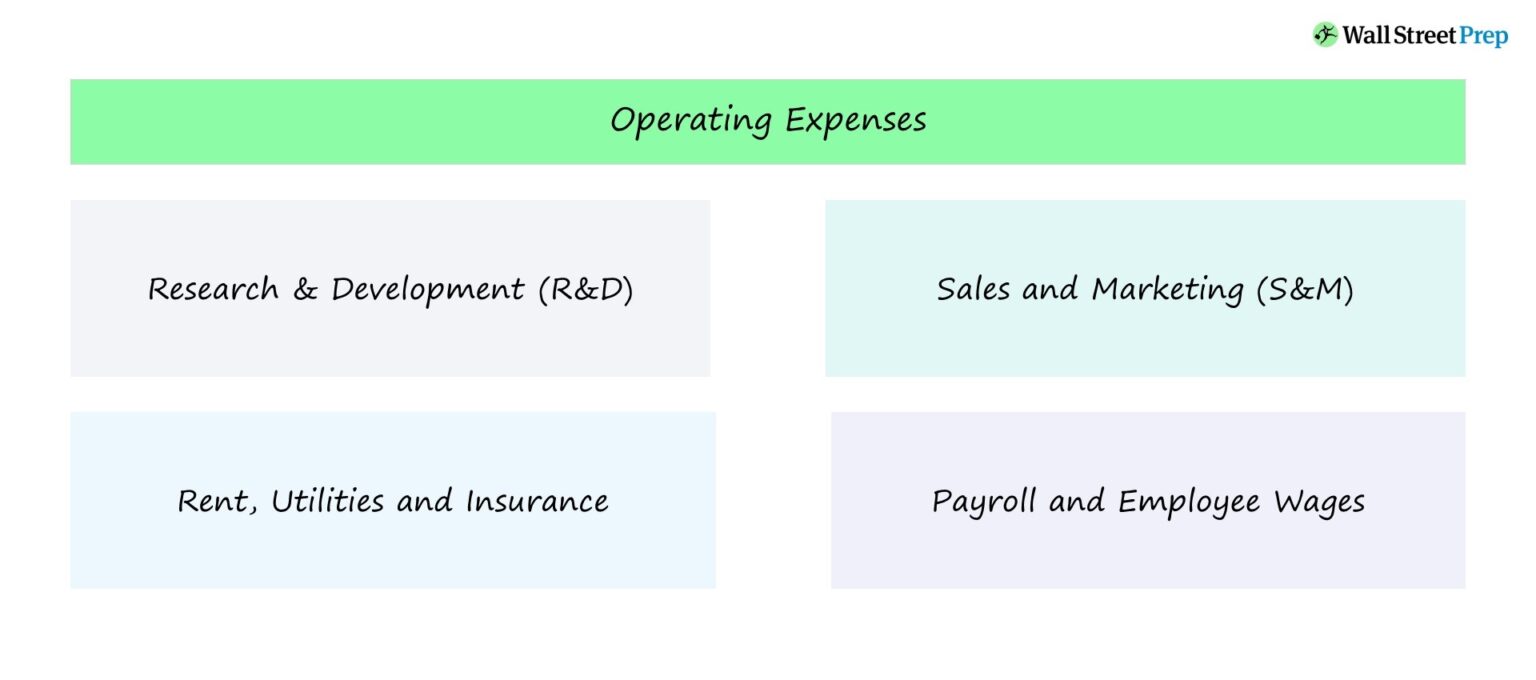
The most common examples of operating expenses incurred by companies are listed here:
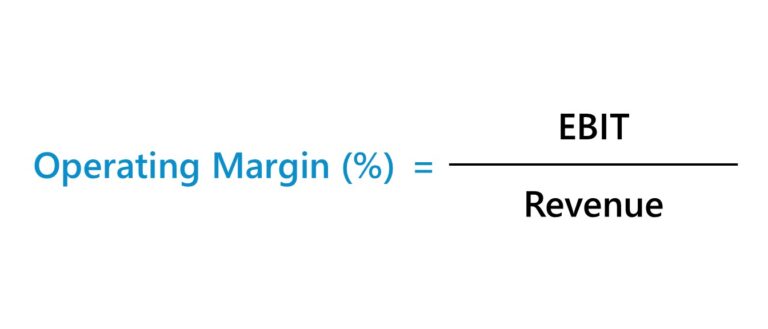
For comparability, operating profit can be divided by revenue to arrive at the operating margin.
Operating Margin (%) = EBIT ÷ Revenue
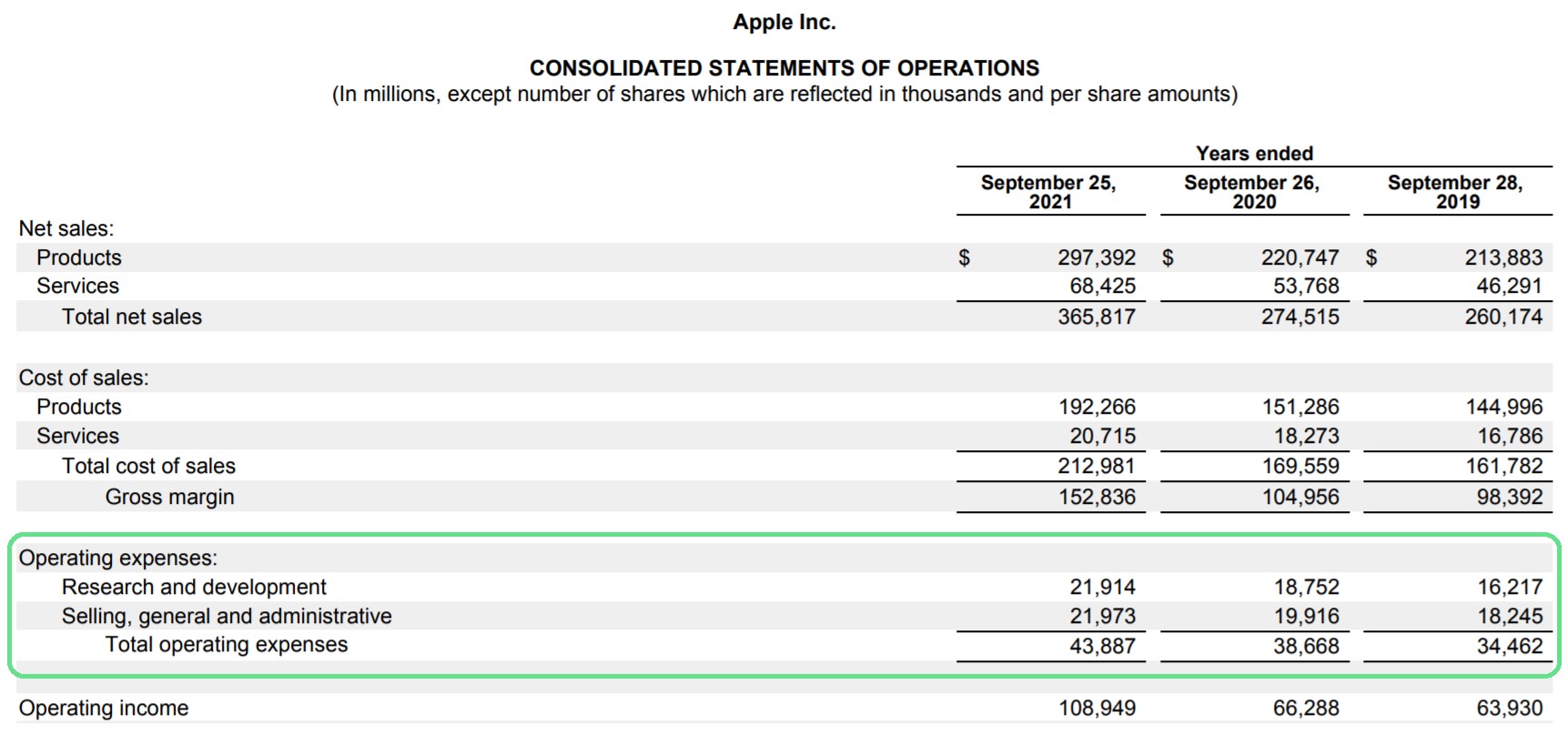
Since operating income considers operating costs (i.e. COGS and OpEx), it represents the cash flow from core operations before accounting for other non-core sources of income/expenses.
That said, management should strive to be more efficient and maintain reasonable levels of operating costs, especially because OpEx is a significant component of the break-even point of a company.
Operating Expenses Calculator
We’ll now move to a modeling exercise, which you can access by filling out the form below.
You’re logged in! Form submission not required. Access your file below.
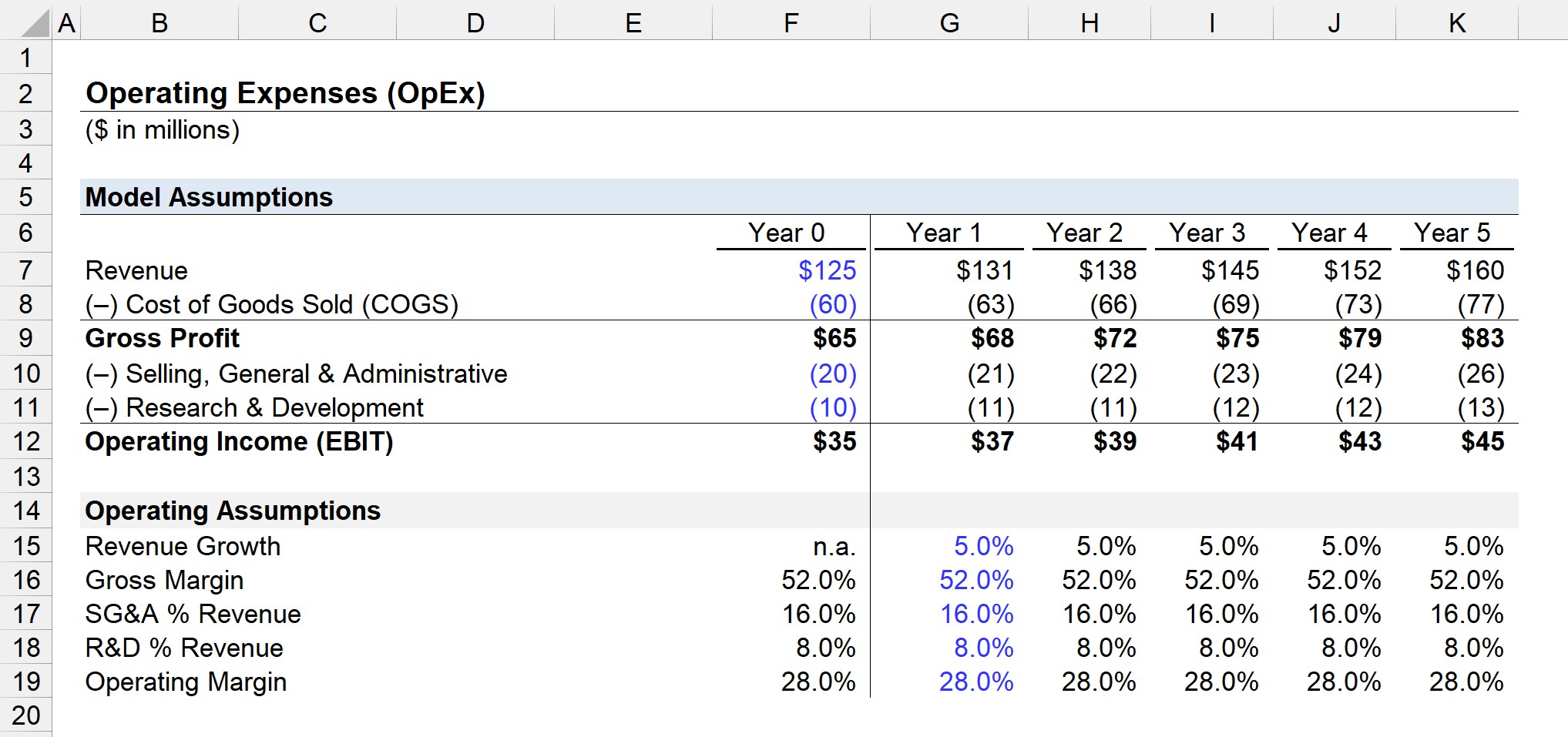
The $30 million in SG&A and R&D are the total operating expenses of our company.
Therefore, the gross margin is 52.0% while the operating margin is 28.0% in Year 0.
3. Operating Expenses Forecast
Next, we’ll project the income statement of our company down to the operating line.
Revenue will be assumed to grow at a year-over-yeargrowth rate of 5.0% while the gross margin remains at 52.0%.
As for our two operating expenses, SG&A and R&D, the two will remain the same percentage of revenue as Year 0.
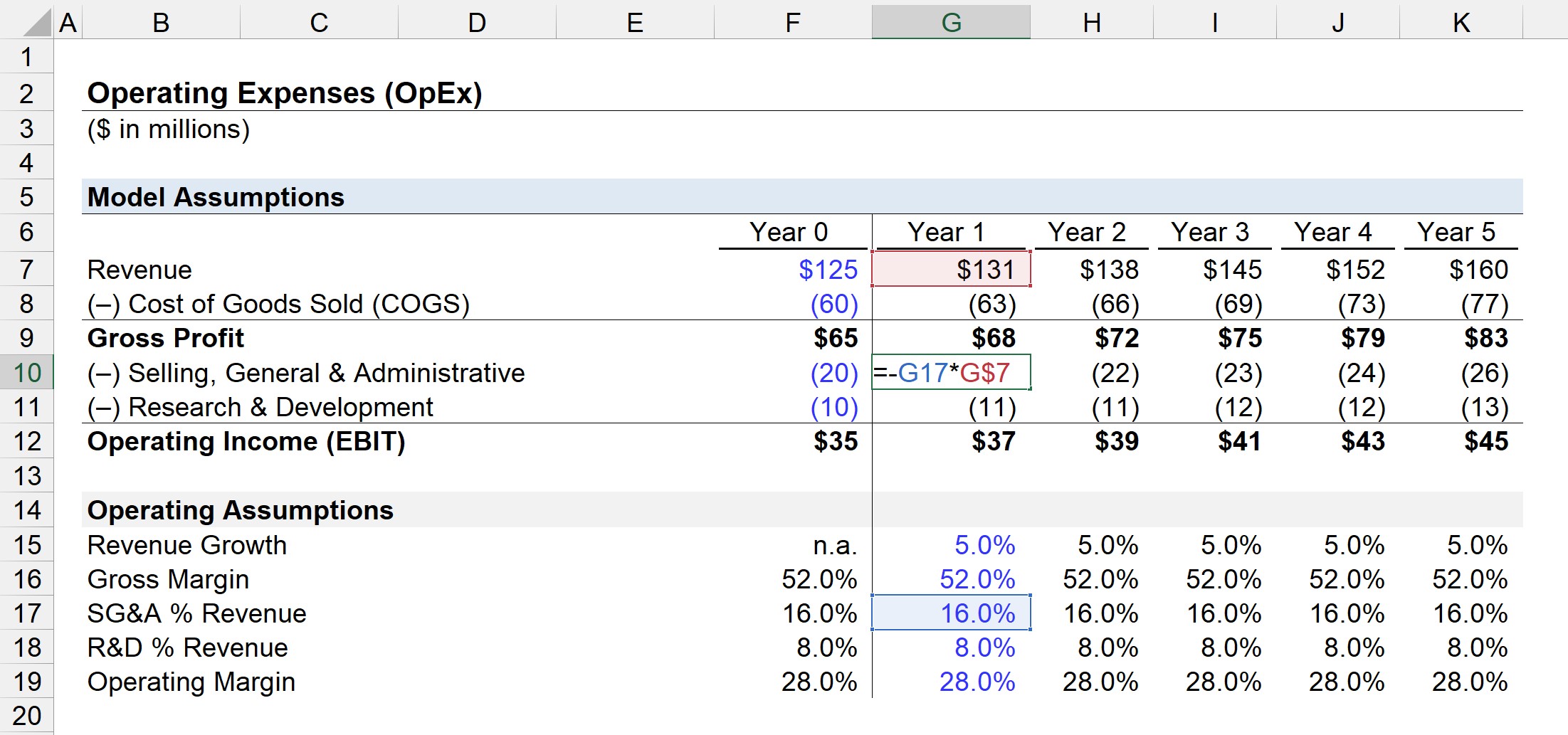
Since SG&A as a percentage of revenue was 16.0% and R&D was 8.0% of revenue in Year 0, we’ll extend this across our assumptions section.
For each period, we can project the OpEx value by multiplying the "% Revenue" assumption by the revenue amount in the matching period, as shown in the screenshot above.
SG&A Expense = (SG&A % Revenue) × Revenue
R&D Expense = (R&D % Revenue) × Revenue
In the final step, the operating income (EBIT) can be arrived at by deducting the projected SG&A and R&D from gross profit.
Continue Reading Below
Step-by-Step Online Course
Everything You Need To Master Financial Modeling
Enroll in The Premium Package: Learn Financial Statement Modeling, DCF, M&A, LBO and Comps. The same training program used at top investment banks.





No comments yet.