What is the Annual Report?
The two terms, Annual Report and Form 10-K, are often used interchangeably. However, the annual report is more marketing-oriented for shareholders, whereas the 10-K is a technical document filed with the SEC.

The two terms, Annual Report and Form 10-K, are often used interchangeably. However, the annual report is more marketing-oriented for shareholders, whereas the 10-K is a technical document filed with the SEC.
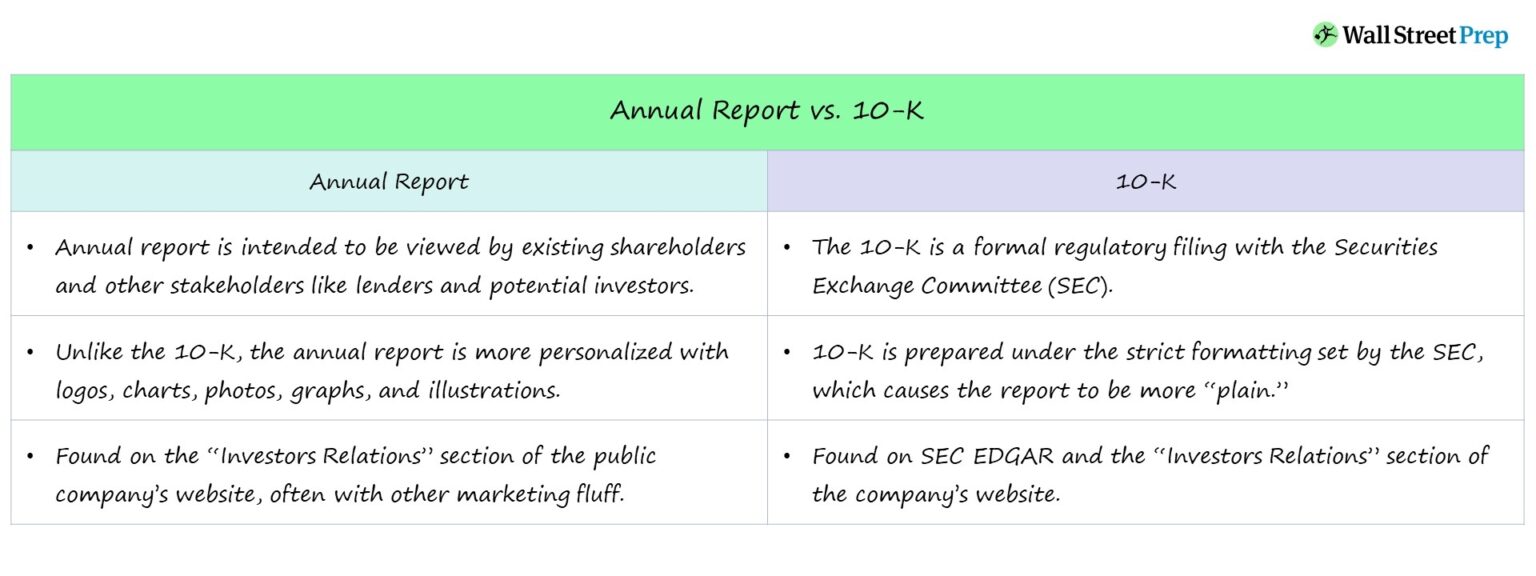
Under SEC guidance, the annual report and 10-K are each filed at the end of a company’s fiscal year.
Within each document, the financial performance and information regarding performance in the trailing twelve months can be found (i.e. the latest fiscal year).
The annual report and 10-K are similar documents, but their differences stem from their intended audiences.
The 10-K is a formal regulatory filing with the SEC, while the annual report is intended to be viewed by existing shareholders and other stakeholders (e.g. lenders, potential investors, customers).
Unlike the 10-K, the distinction with the annual report is that the filing is typically filled with:
In short, the annual report – or at least the earlier sections of the filing – can be viewed as "marketing material" meant to make going through the filing “easier on the eyes” with improved readability.
Since the annual report is directed toward existing (and potential) shareholders – i.e. to encourage further purchases (or fend off desires to sell shares) – the filing has better readability than the 10-K.
By contrast, the 10-K is prepared with the strict formatting expectations of the SEC in mind, which tends to make the report more “dry” and less appealing for the general public and retail investors.
Following an initial section in the annual report with the added “marketing fluff,” most annual reports contain identical data and information as the 10-K.
Company-Specific Approaches
In terms of where to find the annual report and 10-K, the reports can be sourced from:
The difference in the intended audience is evident in the comparison photo posted below of Twitter's annual report and its 10-K filing.
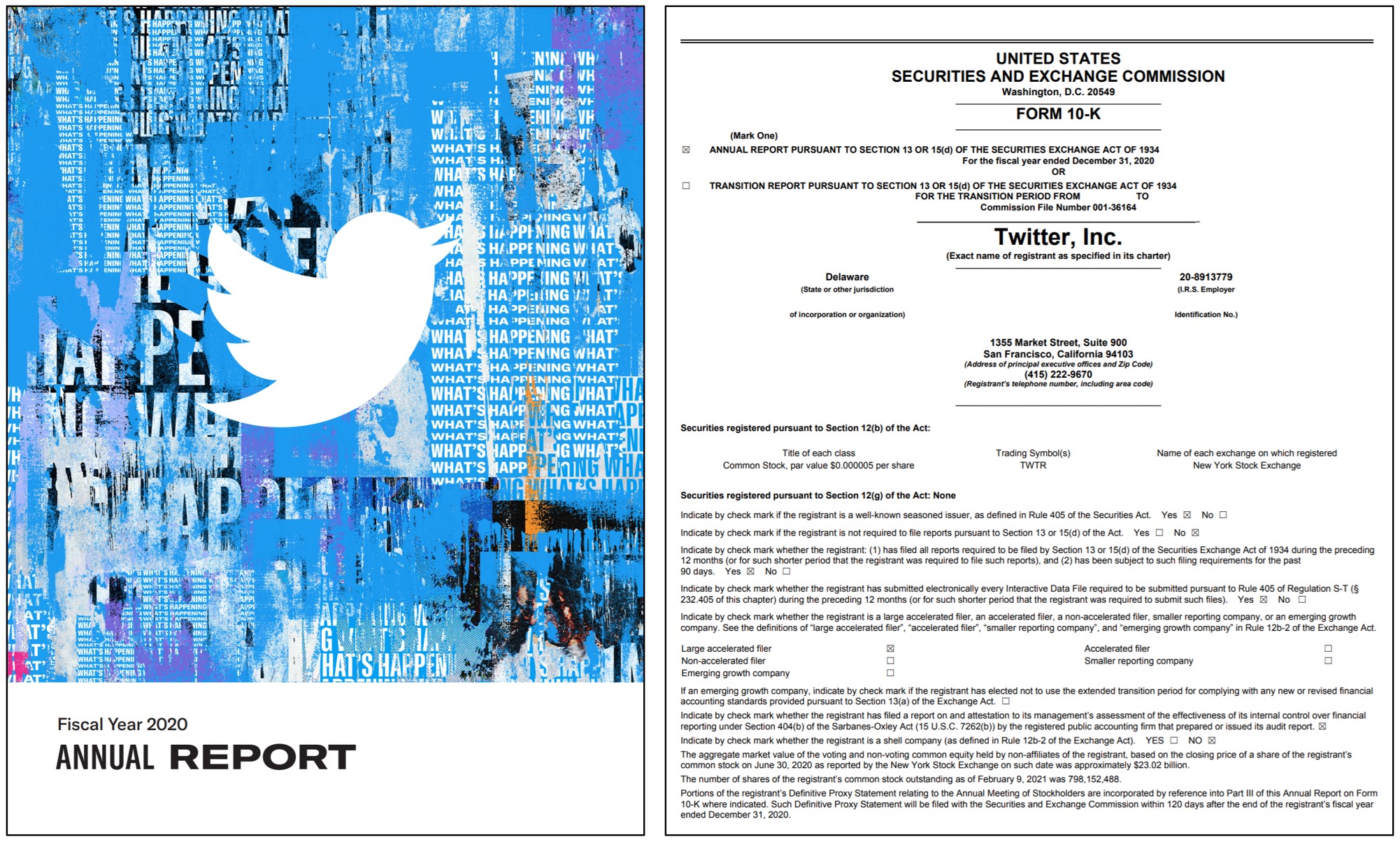
Twitter Example (Source: TWTR Investor Relations)
Clearly from above, the 10-K is meant for regulators and institutional investors, whereas the annual report is more for marketing purposes.
While not always the case, certain annual reports will be prefaced with a personalized letter from the CEO, especially if the company is coming off a disappointing reporting period.
For instance, the number of detailed letters increased substantially post-COVID, as management had to not only explain the damage to their financials, but also reassure investors of their upcoming recovery.
In addition, management had to address how the company was:
Fill out the form below to access a real-world annual report by Twitter (NYSE: TWTR), before the social media company was delisted.



Enroll in The Premium Package: Learn Financial Statement Modeling, DCF, M&A, LBO and Comps. The same training program used at top investment banks.


No comments yet.