- Resources
- Investment Analysis
- Incremental Net Working Capital (NWC)
Incremental Net Working Capital (NWC)
Step-by-Step Guide to Understanding Incremental Net Working Capital (NWC)
How to Calculate Incremental Net Working Capital
The incremental net working capital (NWC) is the ratio between the change in a company’s net working capital (NWC) and the change in revenue in the coinciding period, expressed as a percentage.
The incremental net working capital (NWC) rate answers the question of, "How much of a company’s net revenue is tied up in its operating working capital to generate a dollar of revenue?"
Conceptually, an investment in net working capital (NWC) is a core value driver that contributes toward shareholder value creation.
Therefore, the efficient allocation of capital toward net working capital (NWC) increases the free cash flow (FCF) generated by a company – all else being equal.
- Historical Working Capital Needs ➝ In practice, the main use-case of the incremental net working capital (NWC) rate is to develop an understanding of a company’s historical working capital needs.
- Projection of Working Capital Spending Requirements ➝ Based on the insights derived from analyzing historical data and the trends in recent trajectory, the incremental net working capital as a percentage of incremental revenue can be an operating driver underpinning the pro forma forecast.
The net working capital (NWC) metric – the difference between a company’s operating current assets and operating current liabilities – is a measure of a company’s near-term liquidity and capacity to meet its short-term obligations.
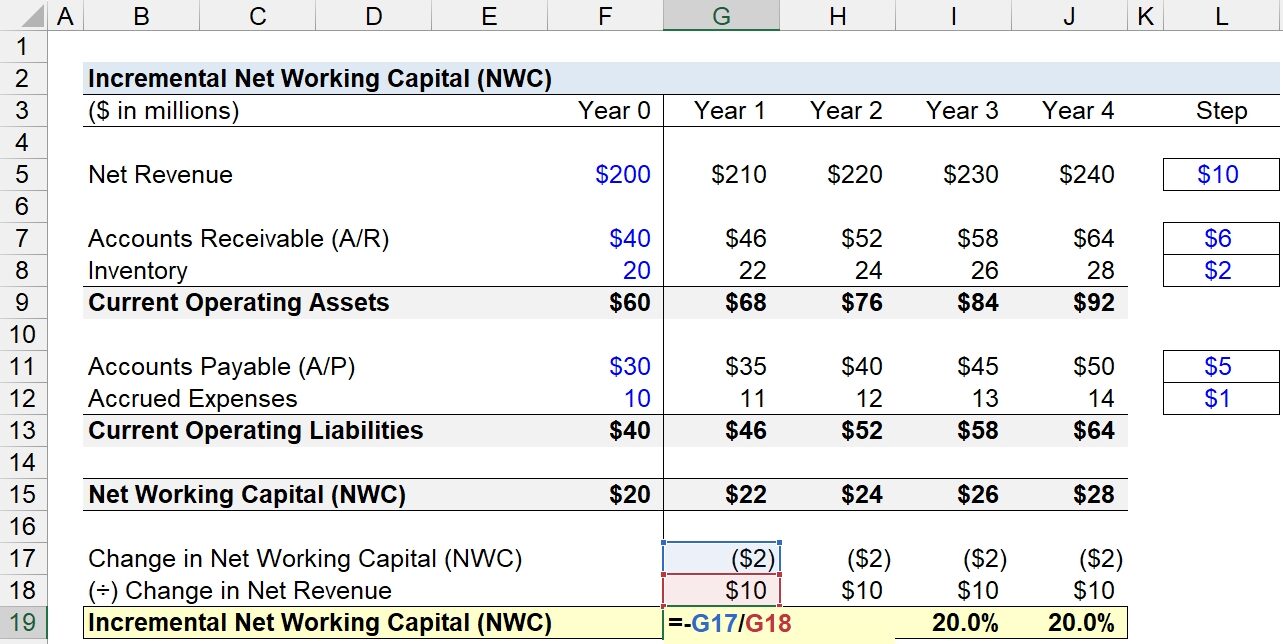
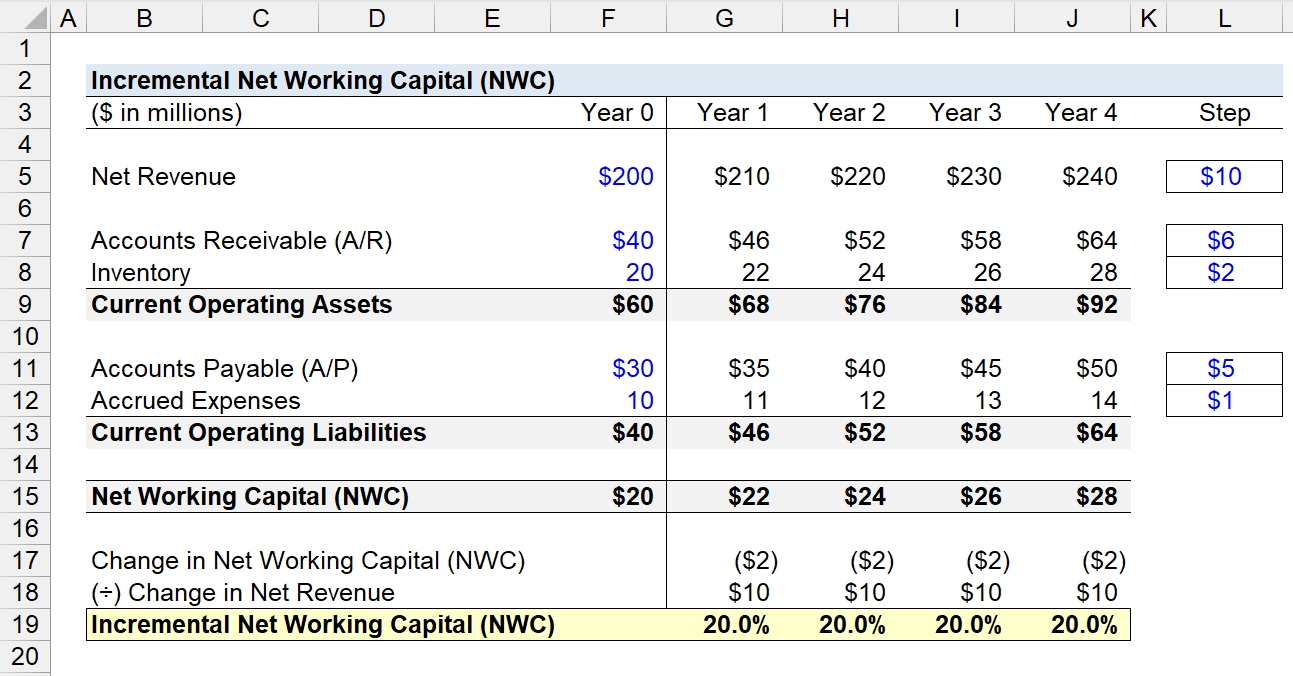
The process to calculate the incremental change in net working capital (NWC) is a six-step process:
- Step 1 ➝ Calculate Operating Current Assets and Operating Current Liabilities in the Current Period
- Step 2 ➝ Calculate Operating Current Assets and Operating Current Liabilities in the Prior Period
- Step 3 ➝ Determine the Net Working Capital (NWC) for the Current and Prior Period
- Step 4 ➝ Calculate the Change in Net Working Capital (NWC)
- Step 5 ➝ Divide the Change in Net Working Capital (NWC) by the Change in Revenue (Current Period Minus Prior Period)
- Step 6 ➝ Convert the Incremental Change in NWC into Percentage Form by Multiplying by 100
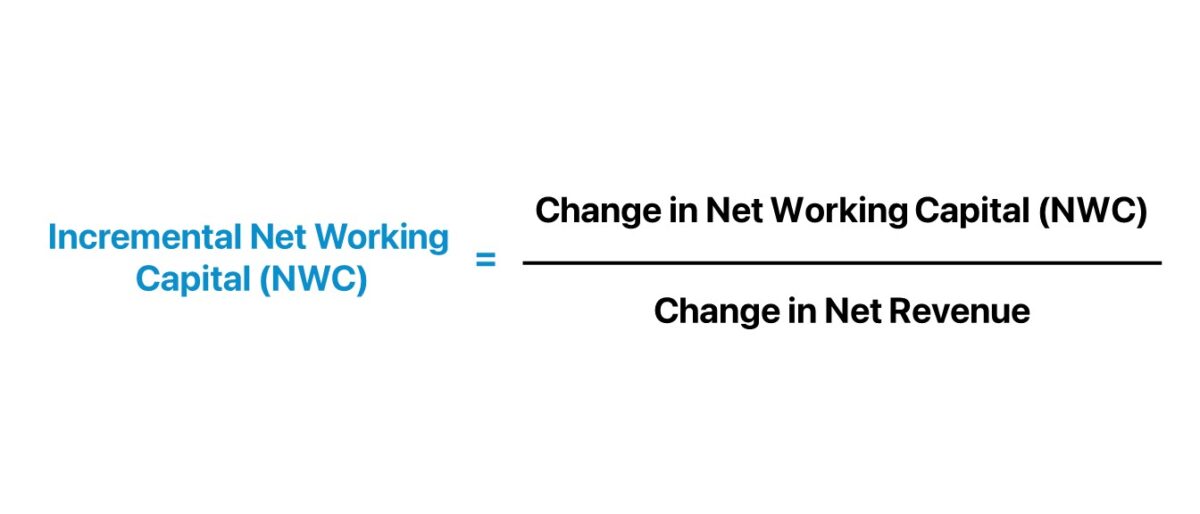
The formula to calculate the incremental change in net working capital (NWC) divides the change in net working capital (NWC) by the change in revenue.
Incremental Net Working Capital (%) = Change in Net Working Capital (NWC) ÷ Change in Revenue
Where:
- Net Working Capital (NWC) = Operating Current Assets – Operating Current Liabilities.
- Change in Net Working Capital (NWC) = Beginning Net Working Capital (NWC) – Ending Net Working Capital (NWC)
- Change in Net Revenue = Ending Net Revenue – Beginning Net Revenue
So, why does the change in net working capital (NWC) formula subtract the "ending" NWC balance from the "beginning" NWC balance?
In short, measuring the change in NWC by deducting the ending period balance from the beginning period balance tends to be more intuitive in terms of understanding the impact on cash (i.e. “inflow” or “outflow”).
If a company’s change in NWC increased year-over-year (YoY), a negative sign is placed in front to reflect that the company’s free cash flow (FCF) is reduced because more cash is tied up in operations.
Note: Consistency throughout the entire model is the priority when it comes to formatting and sign convention in financial modeling.





No comments yet.