What are Current Assets?
The Current Assets categorization on the balance sheet represents assets that can be consumed, sold, or used within one calendar year.

The Current Assets categorization on the balance sheet represents assets that can be consumed, sold, or used within one calendar year.
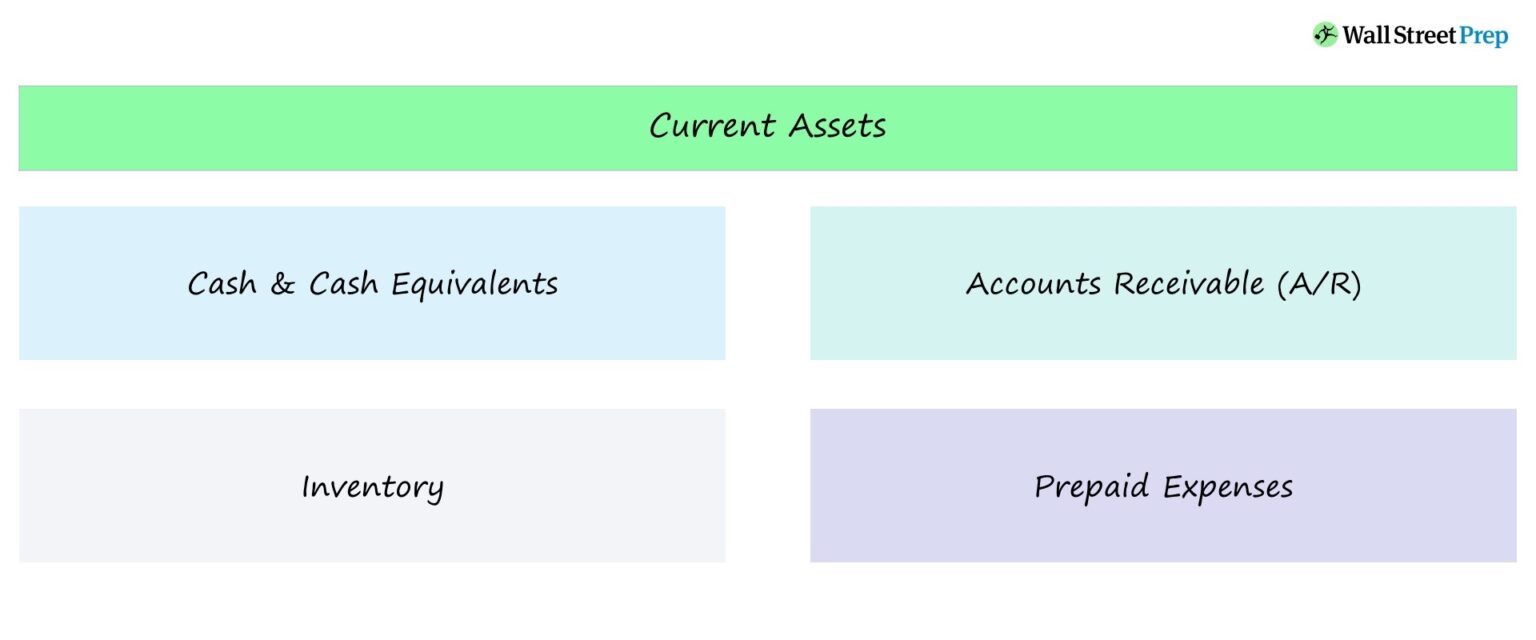
Current assets are recorded on the assets side of the balance sheet (B/S), on top of the non-current assets section.
The balance sheet, one of the core three financial statements, is a periodic snapshot of a company’s financial position.
Together, current assets and non-current assets form the assets side of the balance sheet, meaning they represent the total value of all the resources that a company owns.
The assets section of the balance sheet is ordered from most liquid to least liquid.
The most common examples that appear on the balance sheet are the following:
Non-current assets, or “long-term assets”, cannot reasonably be expected to be converted into cash within one year. Long-term assets are comprised of fixed assets, such as the company’s land, factories, and buildings, as well as long-term investments and intangible assets such as goodwill.
One important rule to note when accounting for long-term assets is that they appear on the balance sheet at their market value on the date of purchase.
Thus, unless deemed to be impaired, the long-term asset's recorded value remains unchanged on the balance sheet even if the current market value is different from the initial purchase value.
The term “liquidity” refers to a company's ability to meet its short-term financial obligations.
Investors can gain a number of insights into a company’s financial strength and future prospects by analyzing its near-term, liquid assets.
Of the ratios used by investors to assess the liquidity of a company, the following metrics are the most prevalent.
Enroll in The Premium Package: Learn Financial Statement Modeling, DCF, M&A, LBO and Comps. The same training program used at top investment banks.


No comments yet.