What is Deferred Revenue?
Deferred Revenue is recognized once a company receives cash payment in advance for goods or services not yet delivered to the customer.

Deferred Revenue is recognized once a company receives cash payment in advance for goods or services not yet delivered to the customer.
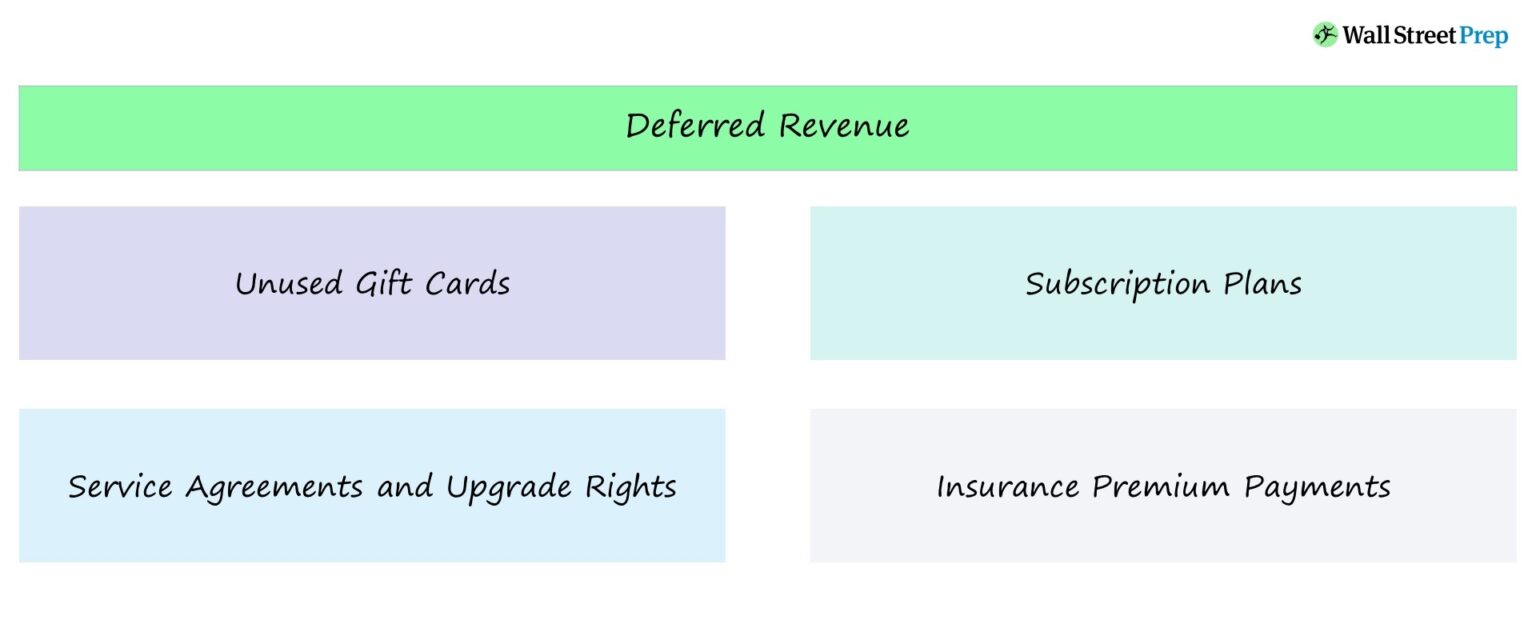
Deferred revenue—or “unearned revenue”—arises if a customer pays upfront for a product or service that has not yet been delivered by the company.
Under accrual accounting, the timing of revenue recognition and when revenue is considered “earned” depends on when the product or service is delivered to the customer.
Therefore, if a company collects payments for products or services not actually delivered, the payment received cannot yet be counted as revenue.
During the time lag between the date of initial payment and delivery of the product or service to the customer, the payment is instead recorded on the balance sheet as “Deferred Revenue”.
Deferred revenue is classified as a liability on the balance sheet, and represents the cash collected prior to the customer receiving the products or services.
For a transaction to be recognized as deferred revenue, the payment must be received in advance, so the benefit to the customer is expected to be delivered later.
Gradually, as the product or service is delivered to the customers over time, the deferred revenue is recognized proportionally on the income statement.
Common Examples
Following the standards established by U.S. GAAP, deferred revenue is treated as a liability on the balance sheet, since the revenue recognition requirements are incomplete.
Typically, deferred revenue is listed as a current liability on the balance sheet due to prepayment terms ordinarily lasting fewer than twelve months.
However, if the business model requires customers to make payments in advance for several years, the portion to be delivered beyond the initial twelve months is classified as a “non-current” liability.
A future transaction has numerous unpredictable variables, so as a conservative measure, revenue is recognized only once actually earned (i.e. the product/service is delivered).
The payment received from the customer receives treatment as a liability because of:
In all the scenarios above, the company must repay the customer for the prepayment.
Another consideration is that once the revenue is recognized, the payment will now flow down the income statement and be taxed in the appropriate period in which the product/service was actually delivered.
The difference between deferred revenue and accounts receivable is as follows.
Suppose a company sells a laptop to a customer at a price tag of $1,000.
Of the $1,000 sale price, we'll assume $850 of the sale is allocated to the laptop sale, while the remaining $50 is attributable to the customer’s contractual right to future software upgrades.
In total, the company collects the entire $1,000 in cash, but only $850 is recognized as revenue on the income statement.
The remaining $150 sits on the balance sheet as deferred revenue until the software upgrades are fully delivered to the customer by the company.
Suppose a manufacturing company receives $10,000 payment for services that have not yet been delivered.
The initial journal entry will be a debit to the cash account and credit to the unearned revenue account.
| Journal Entry | Debit | Credit |
| Cash | $10,000 | -- |
| Unearned Revenue | -- | $10,000 |
Once the services are delivered to the customer, the revenue can be recognized with the following journal entry, where the liability decreases while the revenue increases.
| Journal Entry | Debit | Credit |
| Unearned Revenue | $10,000 | -- |
| Revenue | -- | $10,000 |
Since the revenue is now considered to be “earned” per accrual accounting guidelines, the income statement will recognize the value of the customer payments as revenue.
On the balance sheet, the deferred revenue balance will reduce accordingly based on the revenue recognized.

Enroll in The Premium Package: Learn Financial Statement Modeling, DCF, M&A, LBO and Comps. The same training program used at top investment banks.


How is deferred revenue modeled? Or better any ideas on how to model it effectively?
Hi, Riti,
For businesses that have a lot of deferred revenue, the best approach is to understand how their bookings/billings work (e.g., for a SaaS company, something like the contract value per customer times the number of new customers plus repeat customers each period) and project those first, and then estimate how quickly they recognize revenue. In that case, the deferred revenue is the primary projection and revenue follows from that, not the other way around as we do it, which is a high level guess that deferred revenue as a % of revenue will stay fairly constant.
BB
So when def rev goes up, cash goes up, but what ab when def rev goes down? Does cash go down?
Or when deferred rev goes down, inventory goes down and SE goes up?
Hi, Bib,
That is correct: when D/R goes down, that means that Revenue goes up, and therefore Retained Earnings (part of SE) goes up, and yes, if it is a good sold, then COGS must go up and inventory must go down as well.
BB
How about recognizing deferred revenue before the cash is received but contract with the customer is signed?
Hi, Bob,
A company may keep track of bookings and report it as a leading indicator, but deferred revenue, since it tracks cash received before revenue is recognized, needs to be recorded when cash is received.
BB