What is Notes Payable?
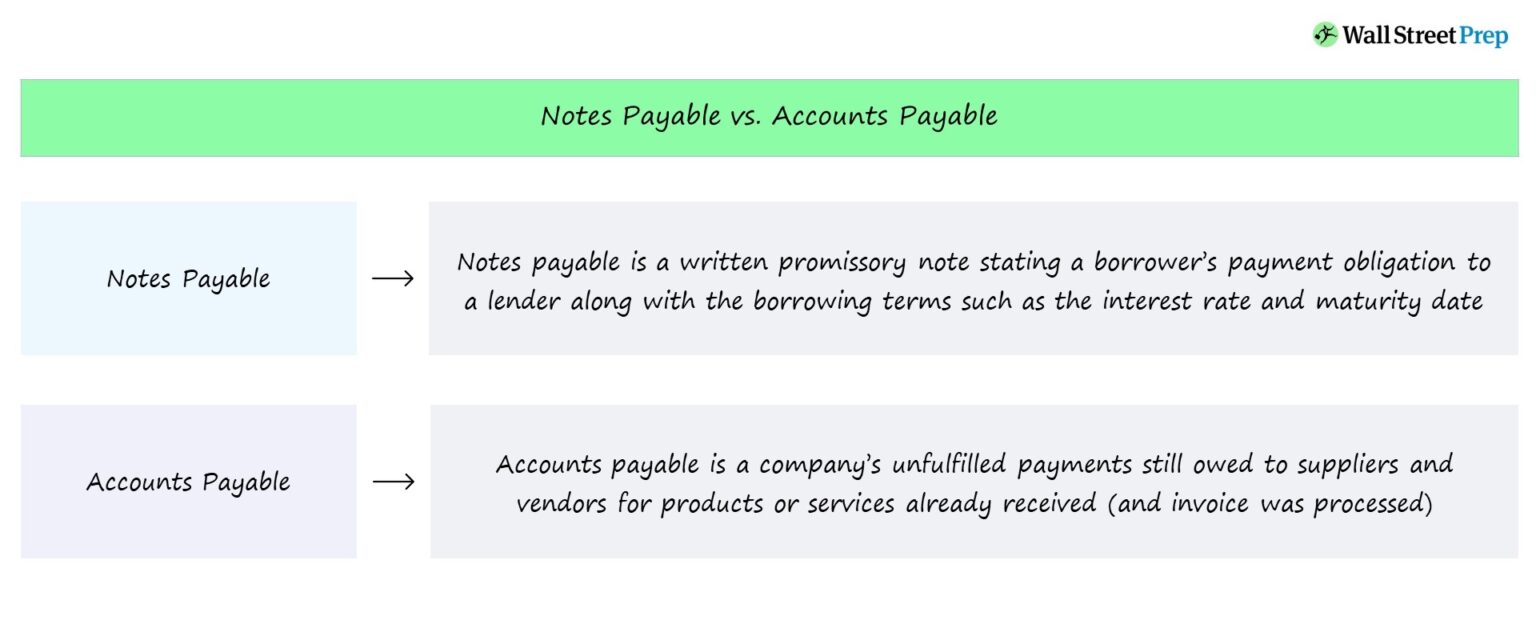
Notes Payable is a written promissory note stating a borrower’s payment obligation to a lender along with the associated borrowing terms (e.g. interest, maturity date).

Notes Payable is a written promissory note stating a borrower’s payment obligation to a lender along with the associated borrowing terms (e.g. interest, maturity date).
The “Notes Payable” line item is recorded on the balance sheet as a current liability – and represents a written agreement between a borrower and lender specifying the obligation of repayment at a later date.
Contained within the notes payable are also the terms stipulated between the two parties, such as:
Similar to accounts payable, notes payable is an external source of financing (i.e. cash inflow until the date of repayment).
By contrast, accounts payable is a company’s accumulated owed payments to suppliers/vendors for products or services already received (i.e. an invoice was processed).
The difference between the two, however, is that the former carries more of a “contractual” feature, which we’ll expand upon in the subsequent section. In contrast, accounts payable (A/P) do not have any accompanying interest, nor is there typically a strict date by which payment must be made.
Nevertheless, some suppliers will charge companies fines for late payments, or discontinue their business relationship if deemed appropriate.
Often, if the dollar value of the notes payable is minimal, financial models will consolidate the two payables, or group the line item into the other current liabilities line item.
Notes payable is relatively similar to short-term debt in the sense that both share the following characteristics:
In conclusion, all three of the short-term liabilities mentioned represent cash outflows once the financial obligations to the lender are fulfilled. But the latter two come with more stringent lending terms and represent more formal sources of financing.

Enroll in The Premium Package: Learn Financial Statement Modeling, DCF, M&A, LBO and Comps. The same training program used at top investment banks.


No comments yet.