What is ESG Investing?
ESG Investing is the commitment by retail and institutional investors to incorporate environmental, social, and governance metrics into their decision-making processes.

ESG Investing is the commitment by retail and institutional investors to incorporate environmental, social, and governance metrics into their decision-making processes.
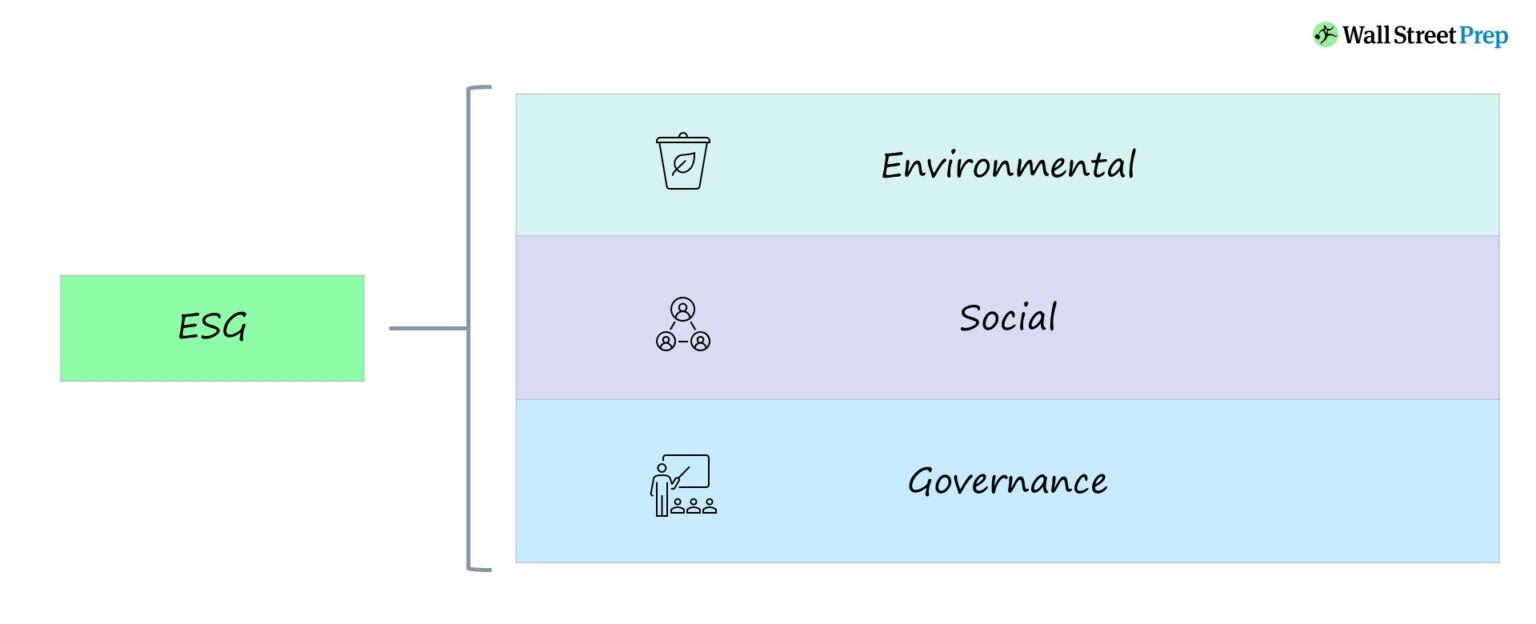
The premise of ESG investing is that companies should deliberate about their impact on the environment and society as a whole – i.e. those acting in the best interests of their customers, stakeholders, and communities are more likely to outperform their peers over the long haul.
ESG investing, also called “impact investing," is taking a socially responsible approach when making investment decisions.
In theory, ESG investing should align the investments within a portfolio with the personal values of a firm (and its investor base).
ESG is an abbreviation for “Environmental, Social and Governance.”
The three pillars represent protecting the natural environment, ensuring social progress, and setting a higher bar for corporate governance standards.
Examples of some of the key issues considered within ESG investing are as follows:
| Environmental | Social | Governmental |
|---|---|---|
|
|
|
|
|
|
|
|
|
|
|
|
Learn how institutional investors identify high-potential undervalued stocks. Enrollment is open for the upcoming cohort.
ESG investing is about investing in tangible progress towards sustainability and other positive societal impacts – while simultaneously recognizing that companies seeking to fix the largest problems are the ones most likely to achieve outsized growth.
Investors focused on ESG gain a more detailed understanding of the companies to which they allocate capital and seek to confirm that their values align.
Based on the investor's personal values (or that of their clients), the screening process integrates ESG into the investment decision.
A considerable amount of capital has been reallocated since society appears to be on the cusp of a transformative era and a structural shift towards sustainability.
Approximately $120 billion in capital poured into ESG-oriented ETFs in 2021, making it a record-breaking year for sustainable investing.
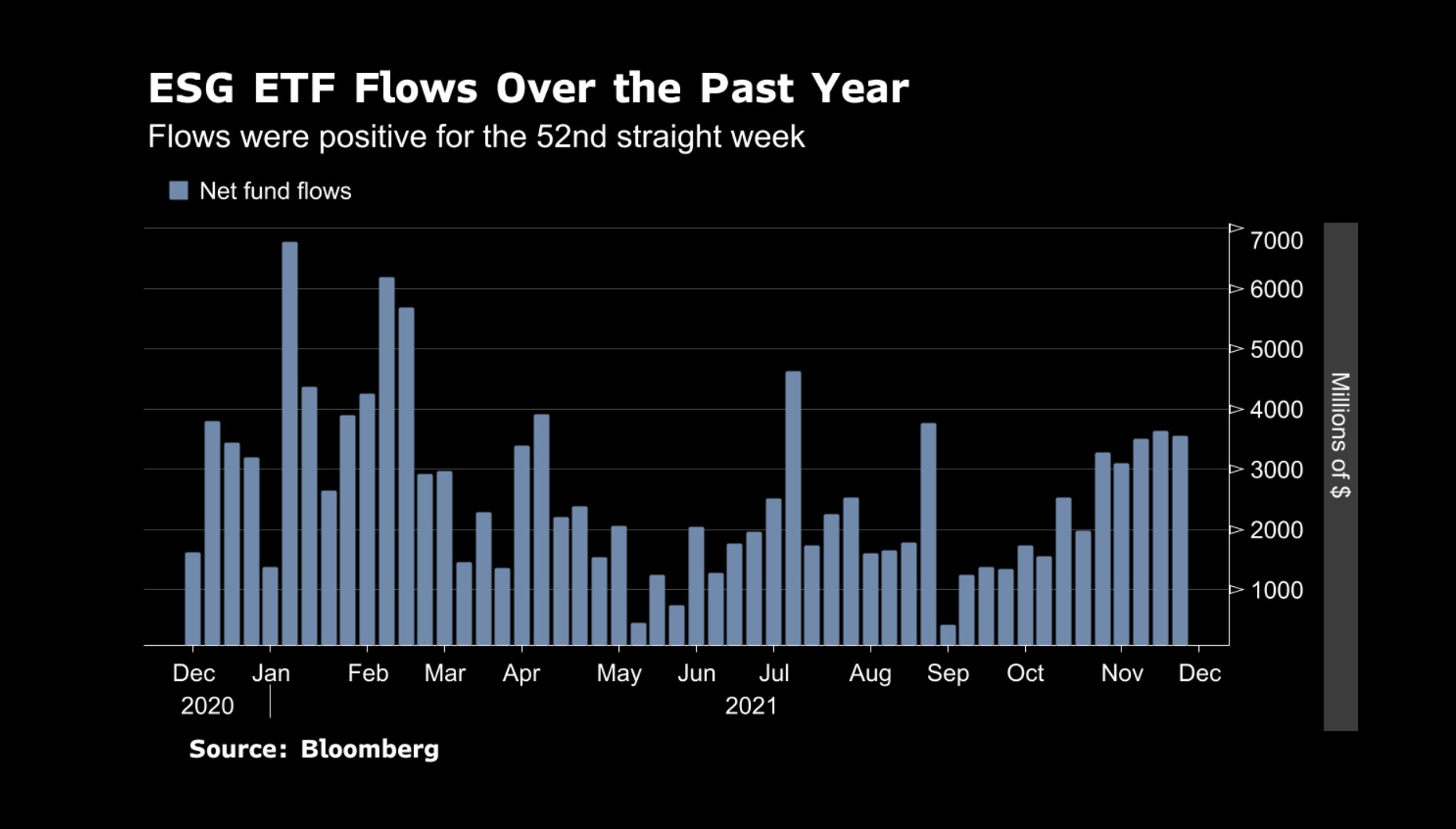
ESG ETF 2021 Flow (Source: Bloomberg)
Most of the largest institutional investors have publicly announced their intention to incorporate ESG metrics into their portfolio allocation strategies.
That said, the ongoing shift toward ESG and sustainable investing can potentially bring profound implications to consumers and companies alike.
Contrary to a common misconception, ESG investing does not necessarily prioritize environmental, social, and governance impacts over returns, i.e. a trade-off between “ethical” investing instead of higher returns.
But rather, ESG is rooted on the basis that the two are not mutually exclusive, i.e. targeted returns can still be met while caring about ESG factors.
In fact, companies proactively fixing environmental, societal, and corporate governance issues can profit over the long run and are not typically placed at a disadvantage by any means.
For example, the MSCI World ESG Leaders Index is a market capitalization-weighted index consisting of companies with high ESG scores relative to their peers.
The difference in returns compared to MSCI World (i.e. the broader market) is negligible, as shown in the graph below.
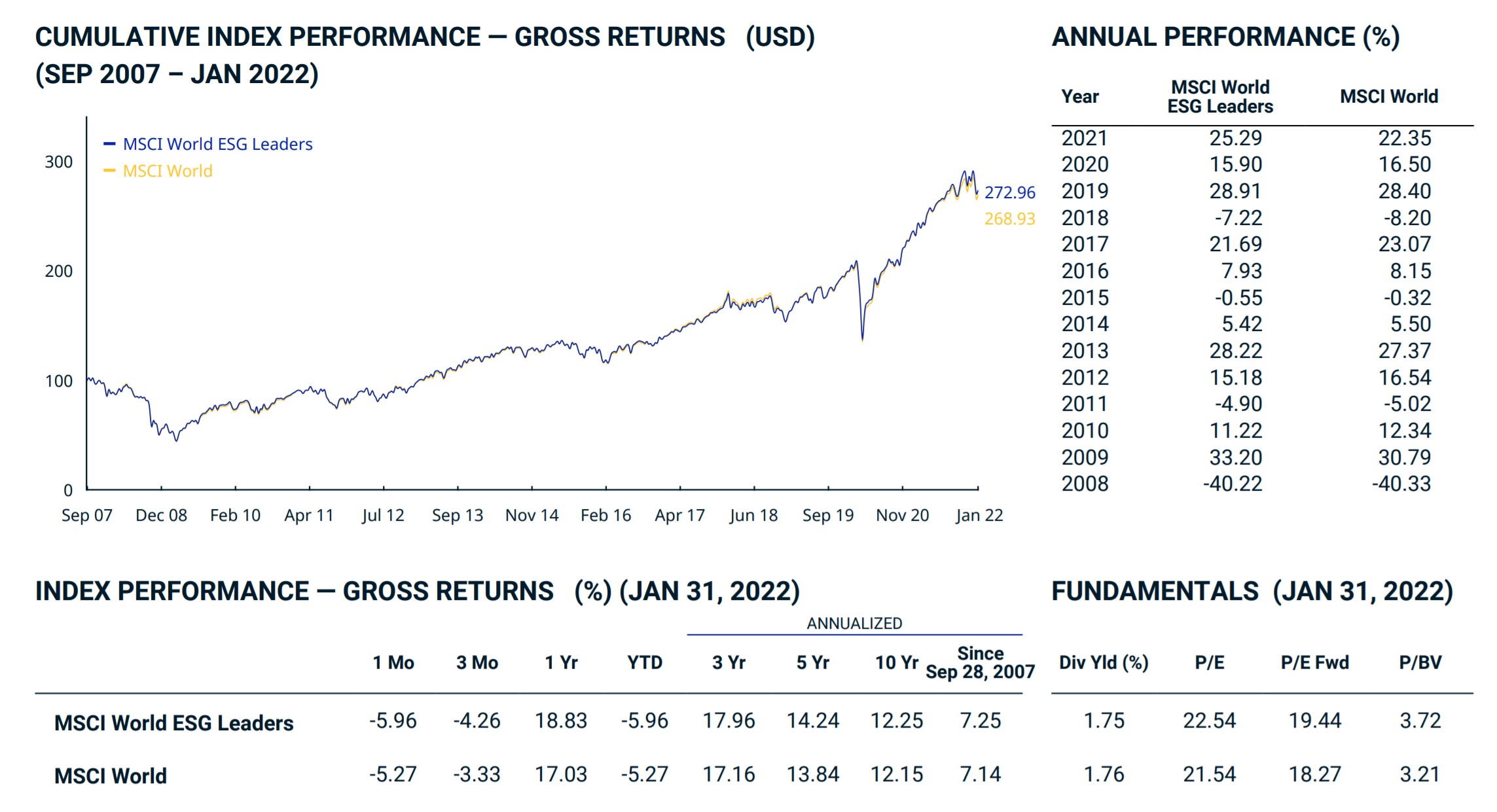
MSCI World ESG Leaders vs MSCI World Performance (Source: MSCI)
After an in-depth evaluation of a company and its resilience (or weakness) to certain long-term risks, MSCI classifies companies into three distinct tiers:
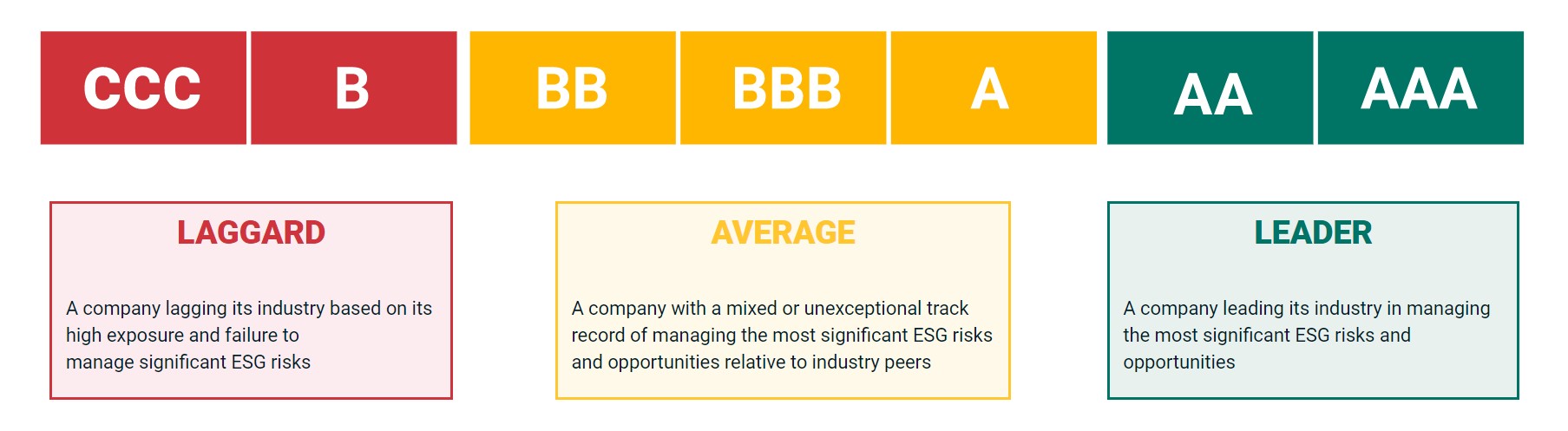
ESG Rating (Source: MSCI)
Considering how ESG data collection tools continue to improve and more ESG mandates are expected to be enforced, the continuation of capital flowing into ESG appears inevitable.
Formerly, firms seemed wary of strictly adhering to ESG standards, but the overwhelming demand from investors seems to have led to the normalization of sustainable investing.
Companies committed to addressing urgent ESG issues are better positioned to realize greater returns in the future for their long-term shareholders, as many of these concerns, such as environmental sustainability and other important societal goals, will only rise in importance over time.
Why? One aspect of achieving long-term, consistent returns is capitalizing on developing trends – and ESG is a major societal shift.
For instance, a startup focused on environmental technology now has a better chance at raising capital from outside investors than ever before, which can further inspire more startups to join in on fixing the same (or adjacent) problems.


No comments yet.