What is Debt Coverage Ratio?
The Debt Coverage Ratio (DCR) is one of the most important metrics in a project finance (PF) model in measuring risk.

The Debt Coverage Ratio (DCR) is one of the most important metrics in a project finance (PF) model in measuring risk.
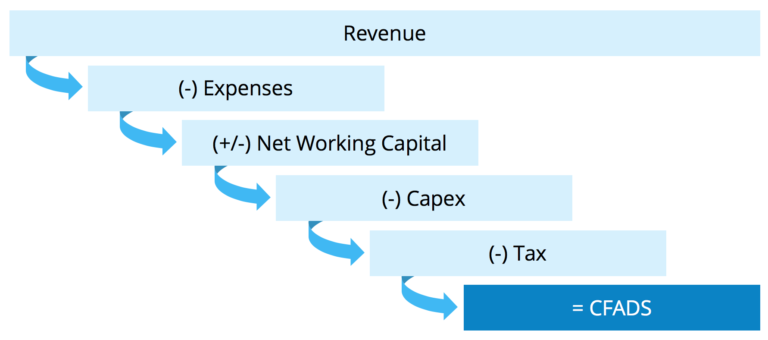
Unlike corporate finance, in project finance lenders are paid back solely through the cash flows generated by the project (CFADS) and DCR functions as a barometer of health of those cash-flows. It measures, in a given quarter or 6-month period, the number of times that the CFADS pays the debt service (principal + interest) in that period.
The debt service ratio (DSR) formula is as follows.
Where:
The debt coverage ratio (DCR) is calculated as CFADS divided by debt service, where debt service is the principal and interest payments due to project lenders. For example, if a project generates $10 million in CFADS and debt service for the same period is $8 million, the DCR is $10 million / $8 million = 1.25x.
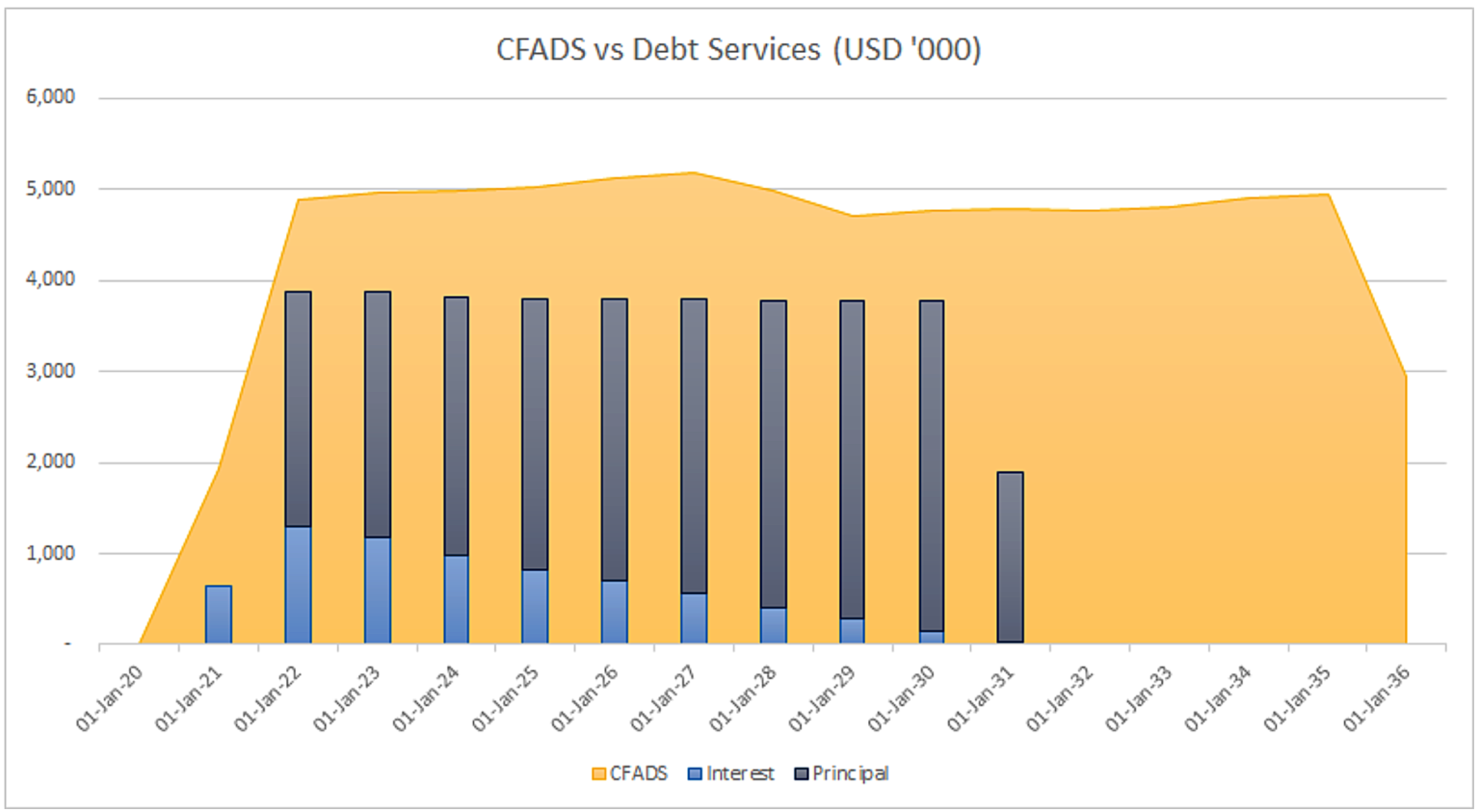
The debt coverage ratio (DCR) is used for two main purposes in project finance:
This is used prior to financial close, in order to determine the debt size, and the principal repayment schedule.
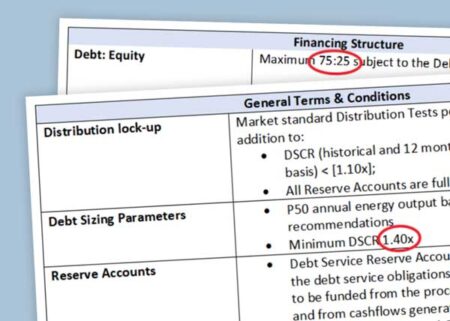
Lenders will set debt sizing parameters, typically including a gearing (or leverage) ratio (Loan to Cost Ratio) and a DCR (sometimes a LLCR in addition to, or instead of, a DCR). While the gearing ratio helps to ensure that equity has skin in the game, the DCR target ratio helps to ensure that a minimum DCR is maintained at all times.
Here the formula is rearranged, and the debt service is calculated based off the forecast CFADS and specified DCR.
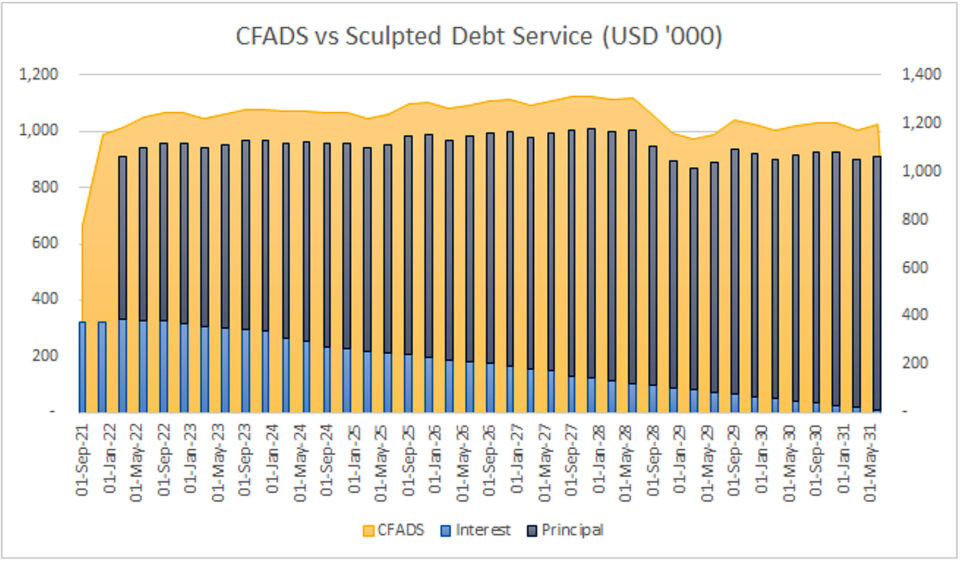
The debt service can be thus calculated in every period to satisfy the lenders sizing parameters. Sculpting the debt service based off the CFADS and target debt service will yield a debt service profile that follows the CFADS (as above).
Upon adding all the principal components of the debt service up, that will calculate the debt size. Learn more about debt sizing here and learn to build macros to automate the process here.
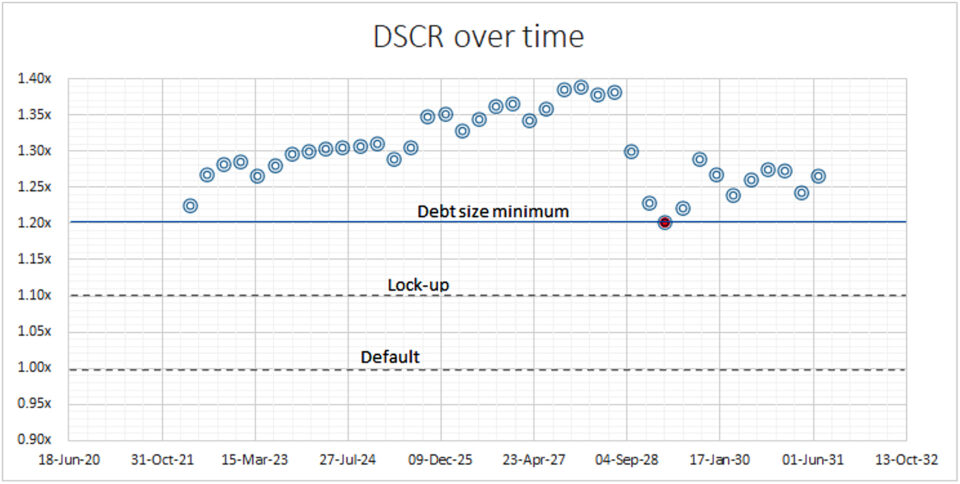
As the loan is getting repaid during the operations phase of a project, covenants are set in terms of maintaining minimum DCRs. There are two covenants to pay attention to
The function of these covenants is to give lenders some control, providing a mechanism through which to bring the project sponsors to the table to re-negotiate.
The DCR can be expressed as both an “in-period” or an annual ratio. The project term sheet will specify how covenants are calculated. As it can fluctuate from period to period, covenants may be defined annually via a LTM (last twelve months) or NTM (next twelve months) summation.

The minimum DCR is usually pulled out of the model to be presented on summaries – this helps to identify a period of weak cashflows and when it occurs.
The average DCR is a useful overall metric to understand how many times the total CFADS during the debt tenor covers the debt service. While a useful metric to have, it is less sophisticated than the LLCR, which takes into account the timing of cashflows through discounting
If the future was perfectly known and the CFADS forecast exactly equaled the CFADS generated, then the debt service could theoretically be set at exactly equal to the CFADS (in other words, the DCR could be 1.00x).
That’s because the lender would be certain to be paid back in every quarter.
Of course, this is theoretical and wouldn’t be favorable to equity investors, who are incented to get distributions as soon as possible (with a cost of equity higher than the cost of debt).
The greater the uncertainty in cash-flows (CFADS), the higher, the buffer between CFADS and debt service. Thus, the riskier the project, the higher the DCR.
The below DCRs are indicative only, as each project will vary. Different industries have different risk profiles, and thus different DCRs.
| Project Sector | Average DCR |
|---|---|
| Water (regulated) | 1.20x-1.30x |
| Wind farm | 1.30x-1.50x |
| Telecom | 1.35x-1.50x |
| Water with offtaker | 1.50x-1.70x |
| Power with no offtaker | 2.00x-2.50x |

Everything you need to build and interpret project finance models for a transaction. Learn project finance modeling, debt sizing mechanics, running upside/downside cases and more.



No comments yet.