What is Corporate Takeover?
A Corporate Takeover describes an acquisition of a company, in which the acquirer obtains a controlling stake in the target.

A Corporate Takeover describes an acquisition of a company, in which the acquirer obtains a controlling stake in the target.
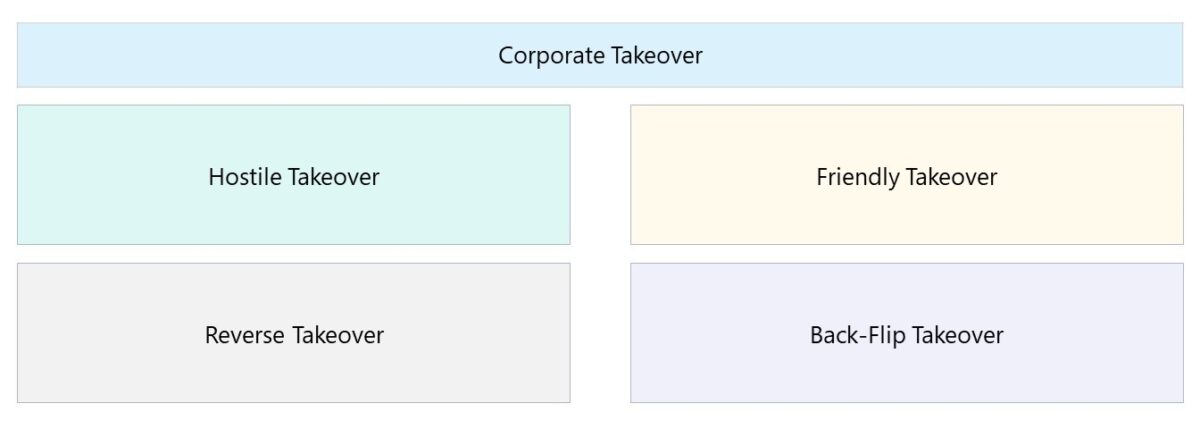
A corporate takeover occurs when a strategic or financial buyer acquires a majority stake in a target company.
Corporate takeovers can be categorized as hostile or friendly, which is based on the receptiveness of the target company’s management team and board of directors to the initial acquisition offer, i.e. their openness to consider the offer and negotiate the terms.
The profile of the acquirer is often a strategic buyer or financial buyer in such M&A takeover transactions.
The process of a corporate takeover is complex, but from a high level, the following list summarizes the general timeline:
| Timeline | Description |
|---|---|
| 1. Tender Offer |
|
| 2. Internal Meetings |
|
| 3. Hiring of 3rd Party Advisory |
|
| 4. Negotiation of Terms |
|
| 5. Shareholder Vote Meeting |
|
Corporate takeovers, as mentioned earlier, can be classified as either a friendly takeover or a hostile takeover:
Generally speaking, most shareholders who actively participate and vote tend to trust management's guidance, unless there have been recent events that have transpired, causing an erosion in trust in management's judgment and decisions (i.e. stock price decline, less shareholder value creation).
In a proxy fight, the hostile acquirer attempts to convince a sufficient percentage of existing shareholders to vote against the existing management team to complete the proposed acquisition.
One critical factor here in terms of shareholder sentiment is the recent performance of the company in terms of its earnings reports and stock price, as underperformance tends to work in favor of the hostile bidder.
Level up your career with the world’s most recognized private equity investing program. Enrollment is open for the upcoming cohort.
Two other less traditional types of corporate takeovers include reverse takeovers and back-flip takeovers:
The main types of risks associated with corporate takeovers include: Anti-Trust Regulations, Activist Inventors, and Cross-Border M&A Regulatory Bodies.
In September 2022, the news was announced that Adobe (Nasdaq: ADBE) would acquire product design platform Figma at a $20 billion valuation.
According to Adobe’s press release, the acquisition was completed to expand the product portfolio and improve Adobe’s Creative Cloud suite by integrating Figma’s real-time collaboration and rapid prototyping capabilities.
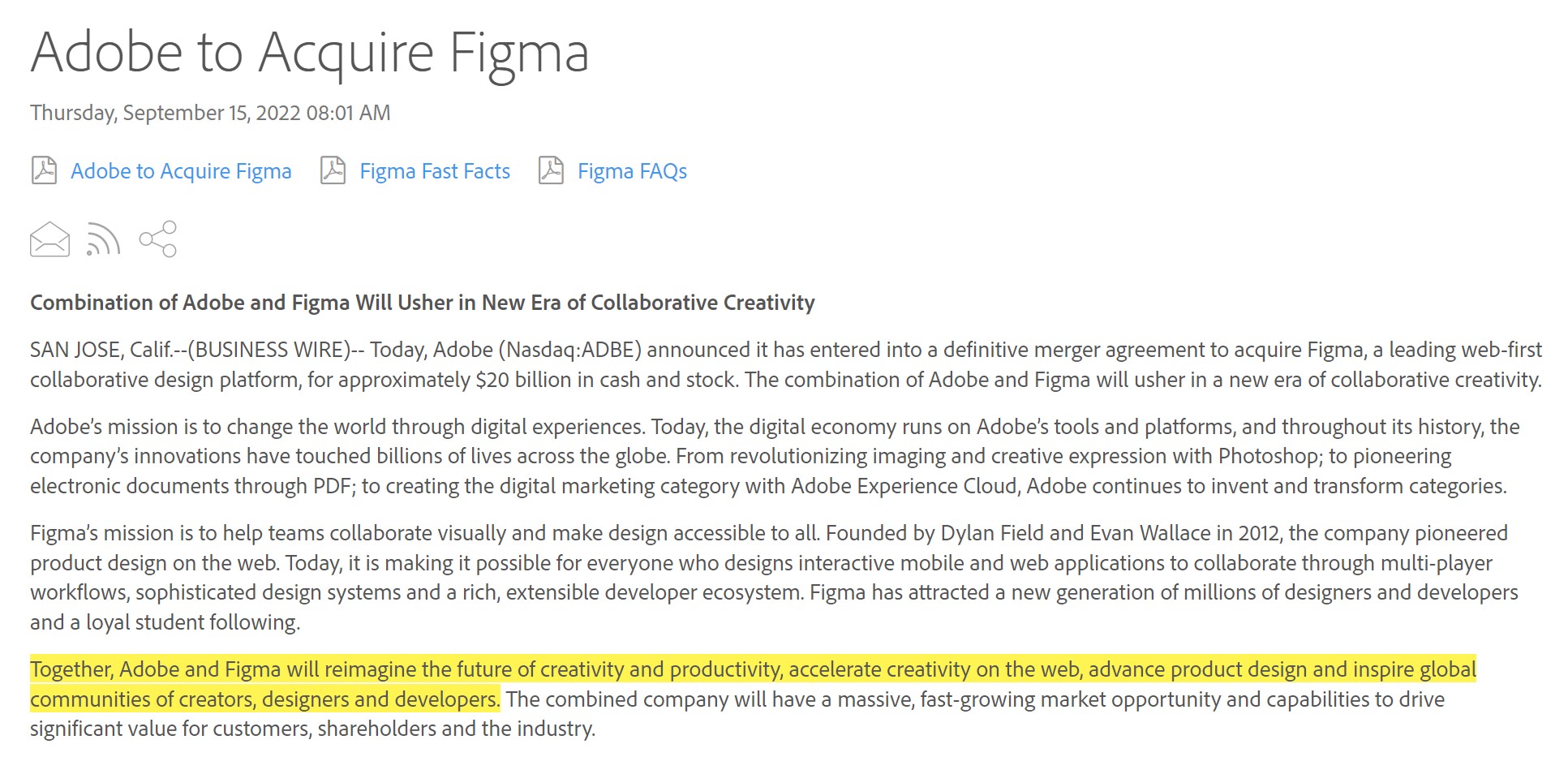
Adobe to Acquire Figma (Source: Adobe Press Release)
Figma, led by CEO Dylan Feld, had increasingly built its name in the design space, in which its collaborative design tools had made its offerings a rival to Adobe.
The target of the corporate takeover, Figma, is not publicly-traded, whereas Adobe is a public company.
The press release from Figma, written by Feld, stated that “Adobe is deeply committed to keeping Figma operating autonomously, and I will continue to serve as CEO” – which implies the friendly nature of the transaction, where the terms of the deal were amicable to both parties.
The market landscape in design had shifted from individual contributions to collaboration-based work, which was the niche in which Figma’s platform appeared to take notable share away from Adobe.
Therefore, Adobe’s takeover of Figma puts them at the forefront of innovative creative design and workplace collaboration-oriented tools, while removing a fast-growing competitor from the market that had presented a major threat.
The European Union (EU) recently announced an anti-trust probe into Adobe’s proposed acquisition bid of Figma, on the basis that the deal could “reduce competition in the global markets for the supply of interactive product design software and for digital asset creation tools.”
Adobe’s expectation to close the Figma takeover in 2023 is still attainable, however, the odds seem to be stacked against Adobe considering the acquisition is under investigation by the U.S. and now the European Union (EU).


No comments yet.