Pari Passu
Step-by-Step Guide to Understanding Pari Passu in Finance
What Does Pari Passu Mean in Finance?
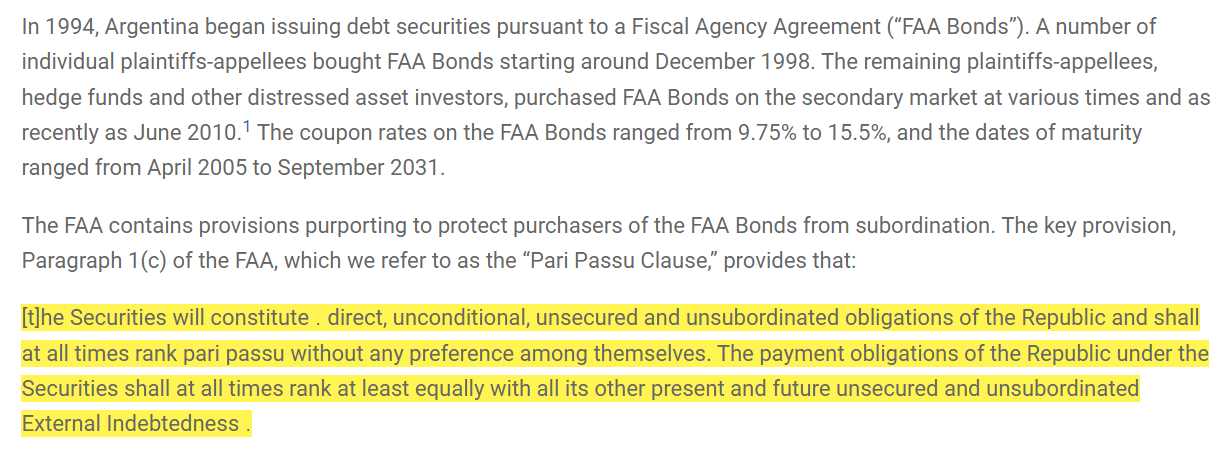
The pari passu clause is a legal provision proclaiming that certain parties, such as specific classes of claim holders in an intercreditor agreement, will receive equal treatment.
The term is most prevalent in corporate insolvencies, in which the debtor—i.e. the distressed company—has filed for bankruptcy protection and will soon undergo an in-court reorganization (Chapter 11) or liquidation (Chapter 7).
In either outcome, the absolute priority rule (APR) must be abided by per the Bankruptcy Code. The APR determines the pecking order by which creditor claims and recoveries are distributed.
How Does the Pari Passu Clause Work in Bankruptcy?
By virtue of possessing a lien on the debtor’s assets, senior secured creditors must be paid in full and receive full recovery before the claims held by lower-priority creditor classes can be paid.
As such, senior secured lenders like banks with a lien on the debtor’s collateral are not “pari passu” with unsecured lenders.
That said, the pari passu clause is generally more relevant to lower priority claim holders, such as lenders of unsecured loans and bonds, because of the lower recovery rates.
The classification of claims is based on shared commonalities and interests. Once the claims are classified into groups, the ranking (and treatment of the consolidated claims) is determined by the Court and then applied to each distinct class, rather than to individual claims.
For example, unsecured creditors in the reorganization (or liquidation proceeding) are treated as being on “equal footing” and the recovery proceeds are distributed on a pro rata basis. If creditors receive recoveries on a pro-rata basis, then their recoveries are in direct proportion to the original amount the debtor owes to the creditor.
Pari Passu vs. Pro Rata: What is the Difference?
- Pro Rata: Pro rata is also a Latin term and translates to “in proportion”. The term describes the proportional distribution of proceeds based on contribution percentage, e.g. the amount of capital provided to the debtor.
- Pari Passu: In contrast, pari passu is a two-part process in which creditor claims are first ranked by priority and put into separate classes, which is then followed by the pro rata distribution of proceeds to each class in accordance with the Court’s decisions. Thus, the difference between the two terms is that “pari passu” is based on the inter-creditor relationships and priority of claims, whereas “pro rata” only describes the allocation of recovery proceeds among the creditors based on the relative contribution percentages.










No comments yet.