What is Debtors vs. Creditors?
Debtors are the entities with unmet financial obligations in the context of business transactions, whereas the Creditors are the entities owed payments.

Debtors are the entities with unmet financial obligations in the context of business transactions, whereas the Creditors are the entities owed payments.
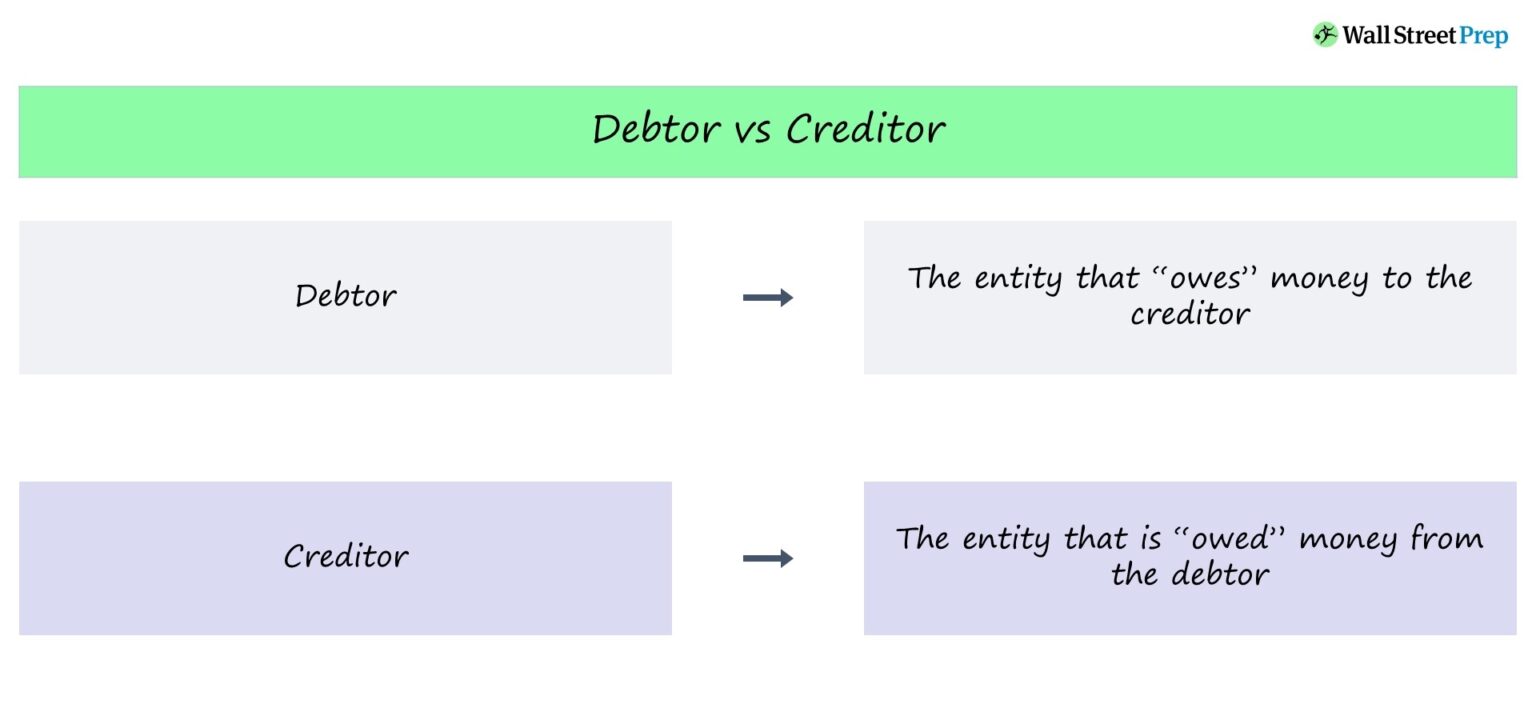
In practically all monetary transactions, there are two sides – debtor vs. creditor.
We'll start with the debtor's side, which is defined as the entities that owe money to another entity – i.e. there is an unsettled obligation.
Debtors on the receiving end of the benefit can include the following types.
On the opposite end of the table is the creditor, which refers to the entity that is owed money (and originally lent money to the debtor).
The debtor/creditor relation is that the creditor is contractually owed compensation for products, services, or capital provided.
Common examples of creditors consist of the following types.
In each financing arrangement, there is a creditor (i.e. the lender) and a debtor (i.e. the borrower).
For instance, let’s say that a banking institution provides debt financing to a company in need of capital.
The debtor is the company that borrowed the capital, and the creditor is the bank that arranged the financing.
The company that took on debt, in exchange for the capital, has three financing obligations:
If the debtor fails to meet any of these obligations as scheduled, the debtor is under technical default and the creditor can take the debtor to Bankruptcy Court.
While the creditor held up its end of the transaction by providing the debt capital, the debtor has unmet obligations, which gives the creditor the right to litigate the matter.
For debt financing, creditors are generally classified as either:
Secured creditors are typically senior banks (or similar lenders) that provide low-interest loans with requirements of the borrower to pledge a certain amount of assets as collateral (i.e. lien).
If the debtor were to undergo liquidation in bankruptcy, the senior lender can seize the collateral from the debtor to recover as much of the total losses as possible from the unmet debt obligations.
As another example, we’ll assume that a company has paid for raw materials from a supplier on credit rather than upfront cash payment.
From the date that the raw materials were received and the cash payment from the company (i.e. the customer) is made, the payment is counted as accounts payable.
During that stretch of time, the supplier acts as a creditor due to being owed cash payment from the company that already received the benefits from the transaction.
The supplier in this case has essentially extended a line of credit to the customer, while the company that purchased the raw materials using credit is the debtor, as the payment must be fulfilled soon.
Practically all transactions with credit as a form of payment includes both creditors and debtors.


Gain a practical foundation in one of the most complex and misunderstood investment disciplines. In collaboration with Wall Street Prep.


No comments yet.