Exit to Learning Dashboard

Stagflation

Step-by-Step Guide to Understanding Stagflation in Economics

Jul. 19, 2026
4m Read

What is Stagflation?

Stagflation describes periods of rising unemployment rates alongside slowing economic growth, or negative gross domestic product (GDP).

In economics, the concept of “stagflation” is a blend between “stagnation” and “inflation”, which are two seemingly contradictory economic events, illustrating how reality often deviates from economic theories.

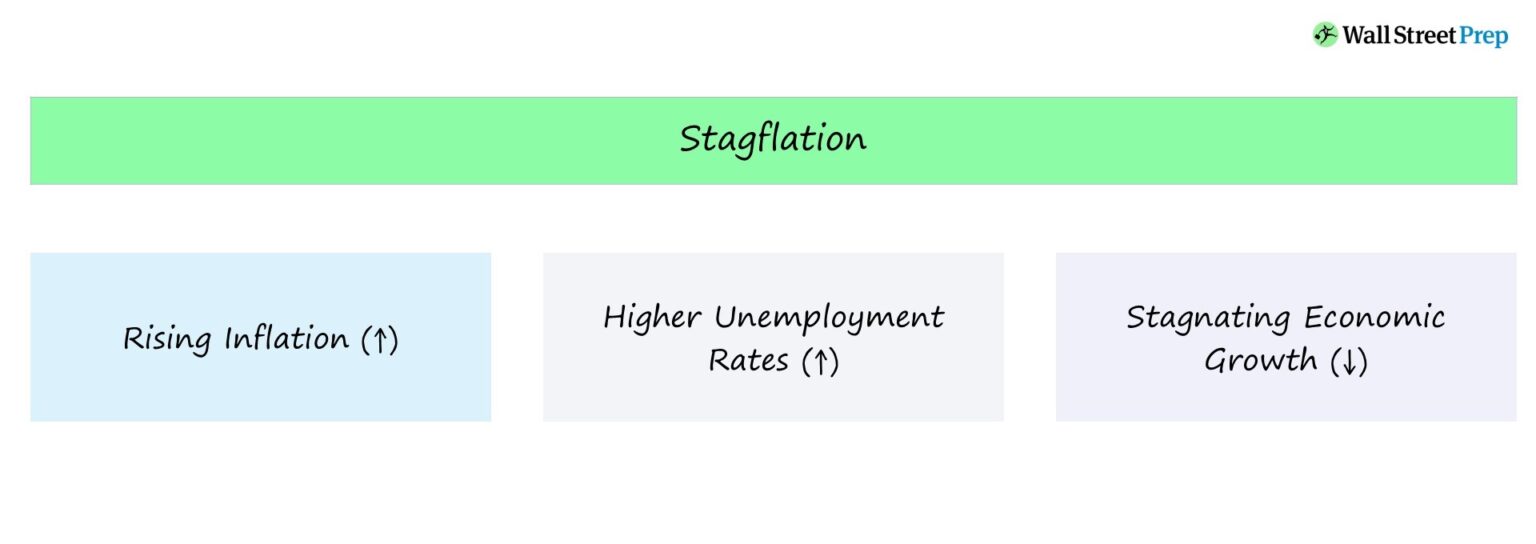
An economic state of stagflation is characterized by rising inflation coupled with stagnating economic growth and soaring unemployment rates (i.e., loss of jobs).

Stagflation Economic Effects
Generate Key Takeaways

How Does Stagflation Work in Economics?

Stagflation, a portmanteau of stagnation and inflation, refers to an economic condition characterized by the concurrent presence of stagnation in economic growth, high unemployment rates, and elevated inflation rates.

The risk of stagflation presents a nuanced challenge to policymakers and economic theorists alike. The combination of a slowdown in economic growth, unfavorable job reports (and unemployment data), and rising price levels from inflation creates a paradoxical scenario.

To clarify, traditional economic models tend to assume an inverse relationship between unemployment and inflation, contrary to stagflation.

Given the high rate of unemployment in the economy, most might expect inflation to decrease, i.e. overall prices decline because of weakened demand.

While the scenario above does in fact occur, there are times when a less probable scenario happens, e.g. high unemployment with rising inflation.

Therefore, the state of high unemployment rates and rising inflation is the defining characteristic of stagflation in economics.

What Causes Stagflation to Occur?

Often, a sudden contraction in global economic growth and rising unemployment rates can set the scene for stagflation.

However, the real catalyst is most frequently a supply shock, which is defined as unexpected events that cause significant disruptions to the global supply chain.

Considering how intertwined the supply chains of various countries have become amid rapid globalization, these supply shocks can have a domino effect in which bottlenecks or shortages can lead to major economic slowdowns.

The most common causes of stagflation are stated in the following list:

  • Supply Shocks, Such as Sudden Increases in Oil Prices
  • Poor Economic Policies, Including Excessive Money Printing
  • Decline in Productivity Growth
  • Structural Changes in the Economy
  • High Unemployment Combined with Slow Economic Growth
  • Rigid Labor Markets and Wage-Price Spirals
  • Loss of Consumer and Business Confidence
  • Mismatched Monetary and Fiscal Policies
  • Global Economic Instability or Recessions
  • Excessive Government Regulation and Intervention in Markets

Continue Reading Below
The Wharton Online & Wall Street Prep Applied Value Investing Certificate Program

Learn how institutional investors identify high-potential undervalued stocks. Enrollment is open for the upcoming cohort.

Enroll Today

Stagflation vs. Inflation: What is the Difference?

The concept of stagflation and inflation are closely tied to each other, as inflation is one of the notable characteristics of stagflation.

  • Inflation: Inflation is the gradual rise in the average prices of goods and services within a country, which can become apparent in the everyday lives of consumers (and weigh down on the economy’s future outlook).
  • Stagflation: On the other hand, stagflation occurs when inflation rises in tandem with declining economic growth and high unemployment. In short, an economy can experience inflation without stagflation, yet not stagflation without inflation.

Stagflation Example: Global COVID-19 Pandemic

Stagflation is an intricate problem to solve for central banks, as seen by the difficult position the Federal Reserve was placed in at the initial outbreak of the COVID-19 pandemic.

  • Initial Period: Following the first wave of the pandemic, the Fed implemented quantitative easing measures designed to increase liquidity in the markets, limit the number of bankruptcies and defaults, and stop the market free-fall.
  • Central Bank Response: The Fed attempted to spur economic growth by essentially flooding the markets with cheap capital, which was highly scrutinized yet achieved the goal of preventing a complete collapse into a recession.
  • Normalization Phase (Post-COVID): However, at some point, the Fed must cut back its aggressive policies to increase liquidity, especially as the economy normalizes in the post-COVID stage. Despite the efforts of the Fed to ease into the transition, the issue of rising inflation has now become the primary concern among consumers.
  • Inflation Risk: The pull-back by the Fed in its monetary policies — i.e., formally, the practice of fiscal tightening — triggered the now record-high consumer expectations for inflation and widespread pessimism in the near term, with many placing the blame entirely on the Fed for its pandemic-related policies. But from the Fed’s perspective, it is certainly a challenging spot to be in because it is near impossible to fix both problems at the same time, and either decision would likely have led to criticism sooner or later.
Comments

No comments yet.