What is Real Rate of Return?
The Real Rate of Return measures the percentage return earned on an investment after adjusting for the inflation rate and taxation, unlike the nominal rate.

The Real Rate of Return measures the percentage return earned on an investment after adjusting for the inflation rate and taxation, unlike the nominal rate.
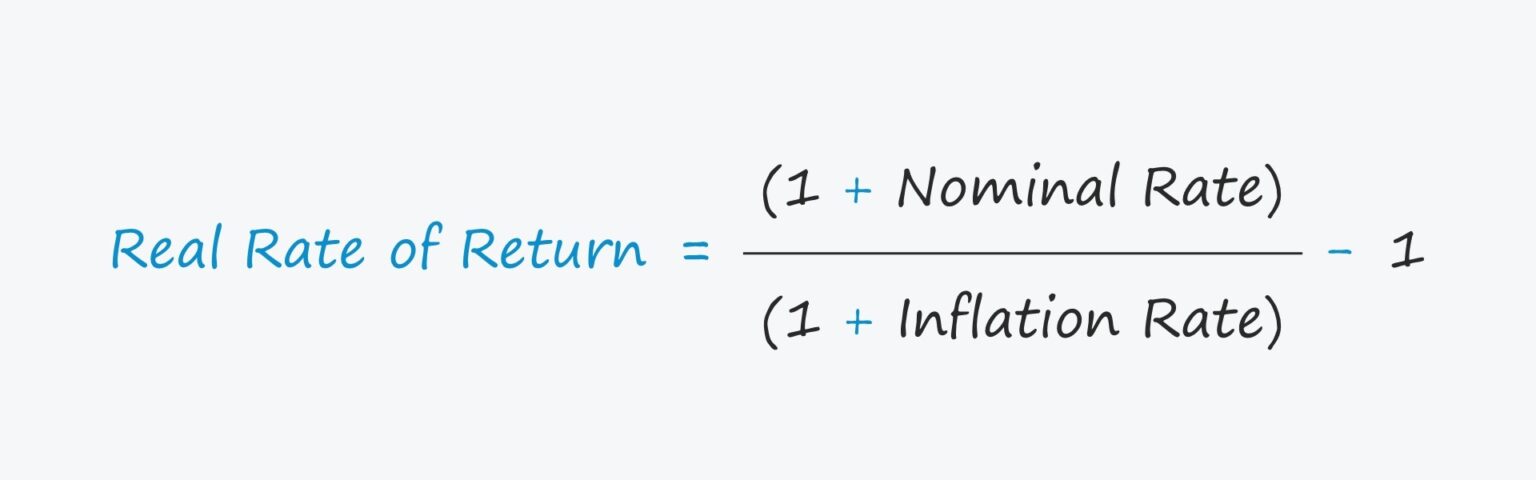
The real rate of return is perceived as a more accurate measure of returns since the metric considers the factors that influence the actual return, namely inflation.
Inflation measures the change in pricing of a set of goods and services across a given time frame.
The real return is calculated using the formula shown below.
Where:
Suppose an investment firm's portfolio of stocks (i.e. public equities) generated a stated annual return of 10%.
The 10% annual return reflects the nominal rate. However, let’s say that inflation was 3% for the year, which reduces the 10% nominal rate.
The question now is, “What is your portfolio's real rate of return?”
Learn how institutional investors identify high-potential undervalued stocks. Enrollment is open for the upcoming cohort.
Unlike the real rate, the nominal rate is the unadjusted rate of return, ignoring the effects of inflation and taxes.
In contrast, the real return earned on an investment is the nominal rate adjusted by the following two factors to estimate the "actual" return.
Inflation and taxes can erode returns, so they are serious considerations that should not be ignored.
In particular, the real and nominal rates will deviate from each other more drastically in times of high inflation, such as in 2022.
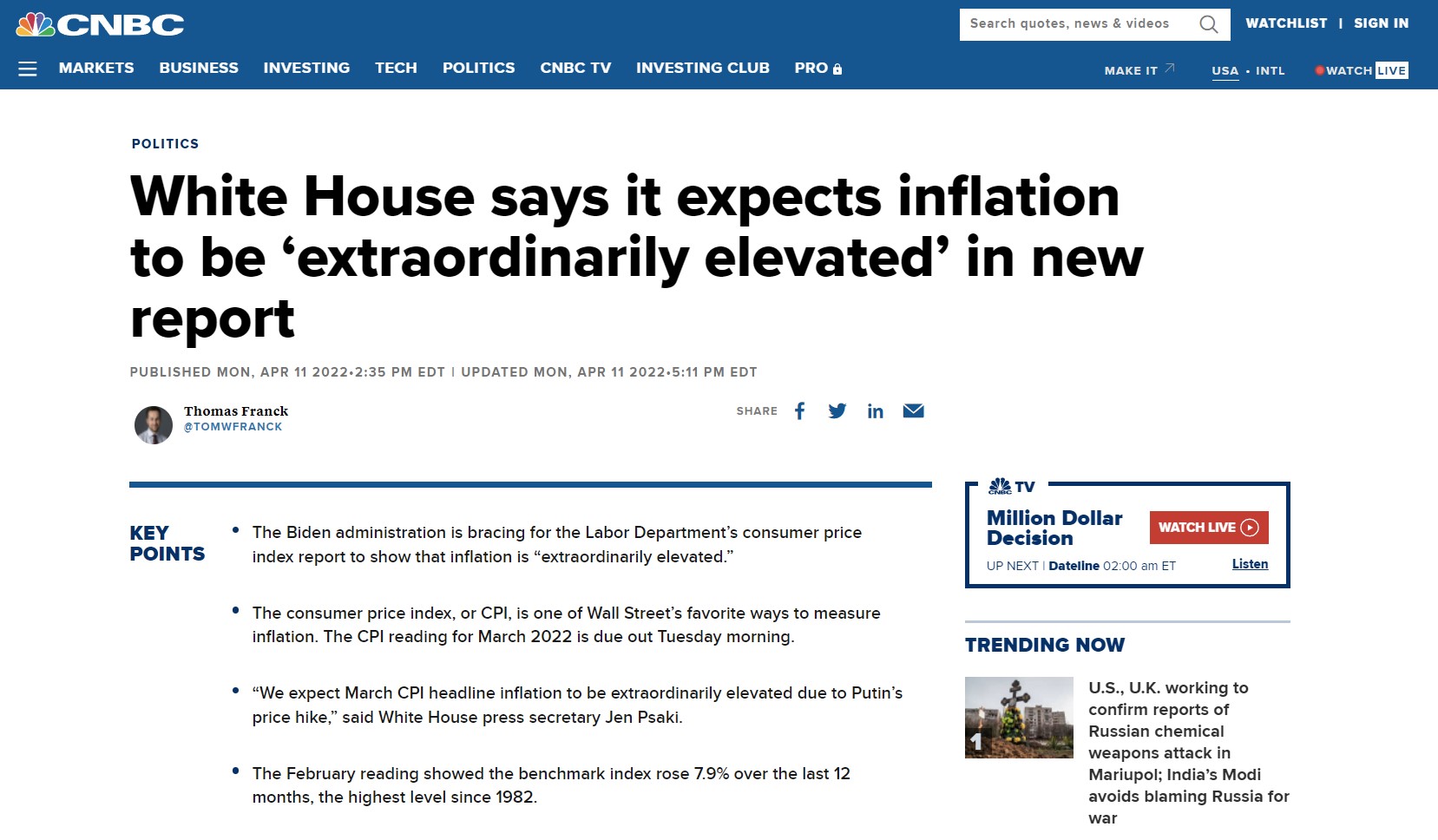
2022 CPI Report Inflation Data (Source: CNBC)
For instance, if the nominal rate stated on your checking account is 3.0% but inflation for the year was 5.0%, the real return rate is a net loss of –2.0%.
Thus, your savings accounts actually declined in value, in "real" terms.
The next adjustment to understand the actual cost of borrowing (or yield) is taxes.
Once the tax-adjusted nominal rate is calculated, the resulting rate would then be plugged into the formula as presented earlier.
We’ll now move to a modeling exercise, which you can access by filling out the form below.


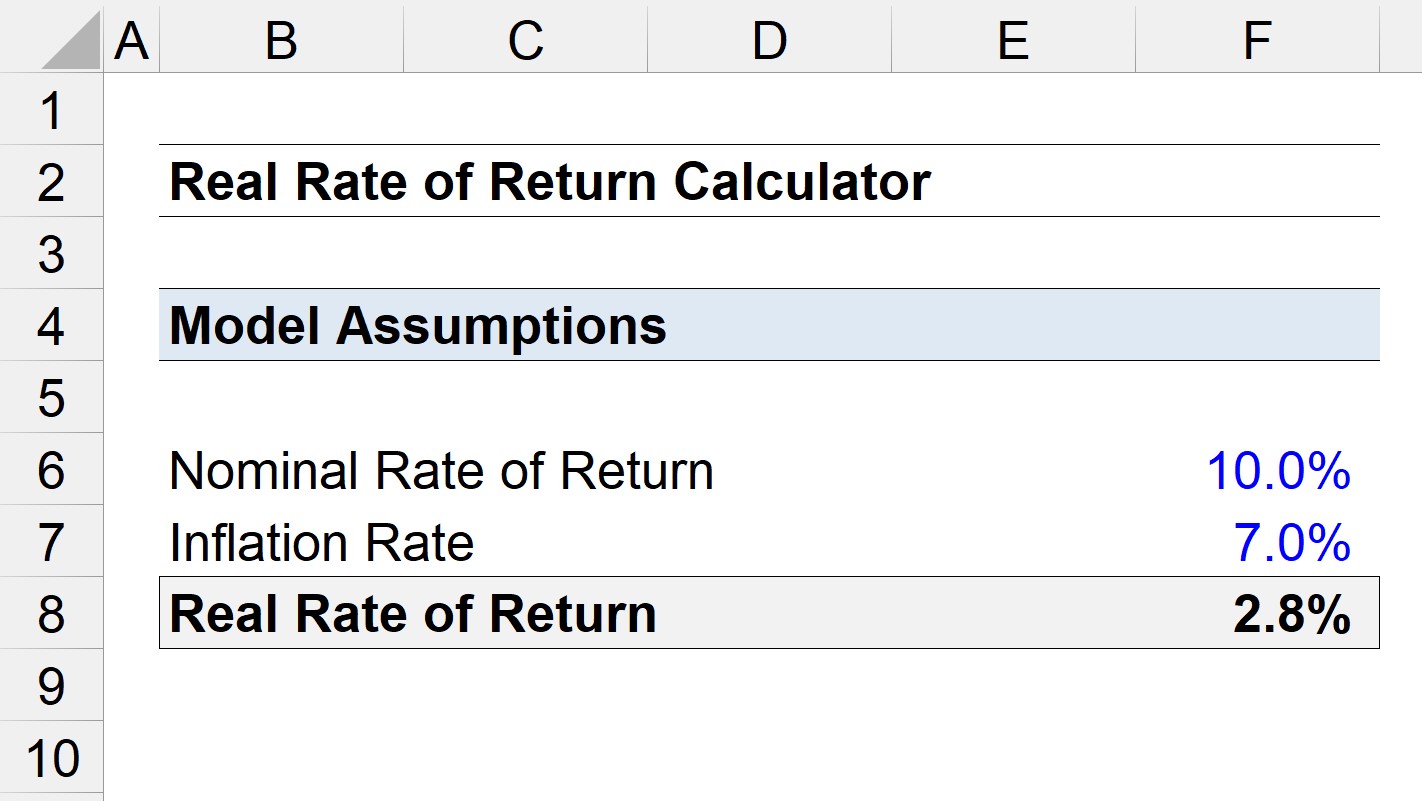
Suppose we are calculating an investment's "real" rate of return, in which the nominal return was 10.0%.
If the inflation rate in the same period came out as 7.0%, what is the real return?
Using those assumptions, we arrive at a real return of 2.8%.
Compared to the 10% nominal rate, the real return is approximately 72% lower, reflecting how influential inflation can be on actual returns.


No comments yet.