Full Time Equivalent (FTE)
Step-by-Step Guide to Understanding Full Time Equivalent (FTE)
UpdatedJul. 19, 2026
Read Time3m
How to Calculate Full Time Equivalent (FTE)
FTE, an abbreviation for "full time equivalent", counts the approximate number of full-time employees employed by a specific company, but with the inclusion of part-time employees.
Employers can use FTE to evaluate their hiring capacity and current payroll, as well as for reporting purposes related to labor laws and employee benefit programs.
The FTE calculation counts part-time employees as a fraction of a full-time employee, most often on the basis of the number of hours worked.
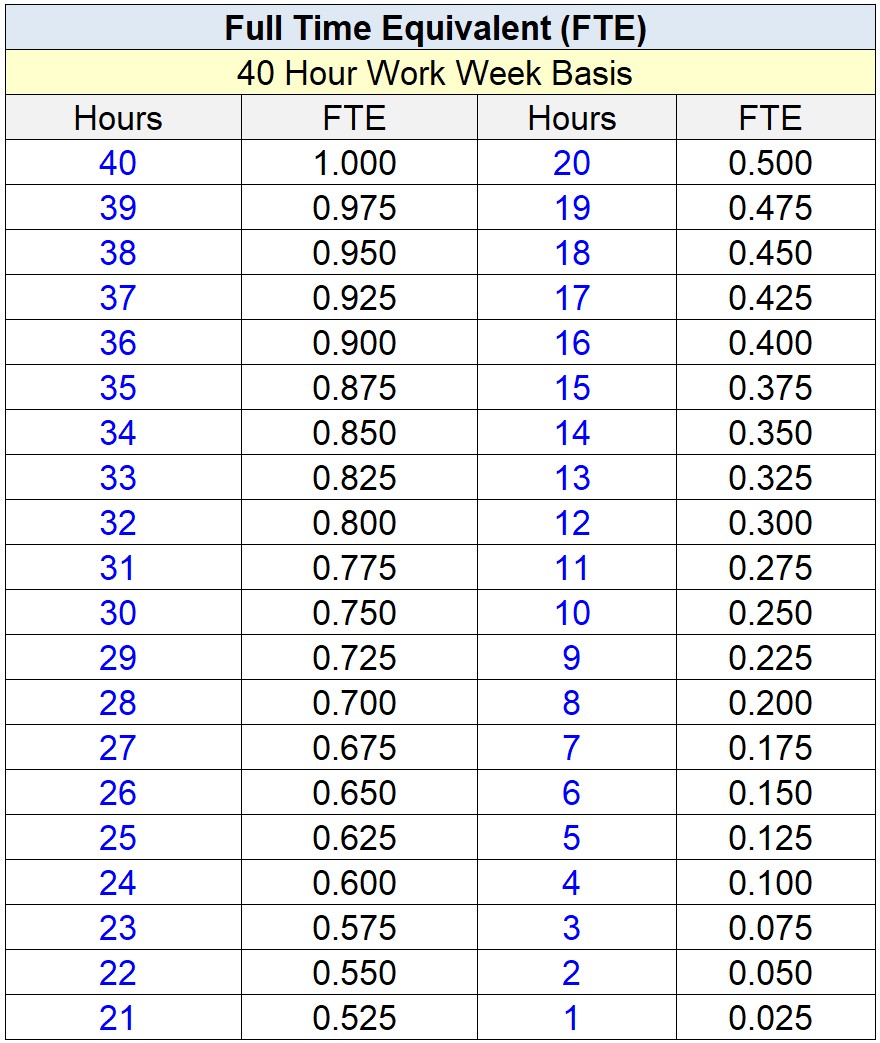
The baseline in order to qualify as 1.0 unit of a full-time employee is set at 40 hours, so a part-time employee that worked 20 hours would be marked as a 0.5 FTE.
- 40-Hour Work Week → 1.0 FTE
- 20-Hour Work Week → 0.5 FTE
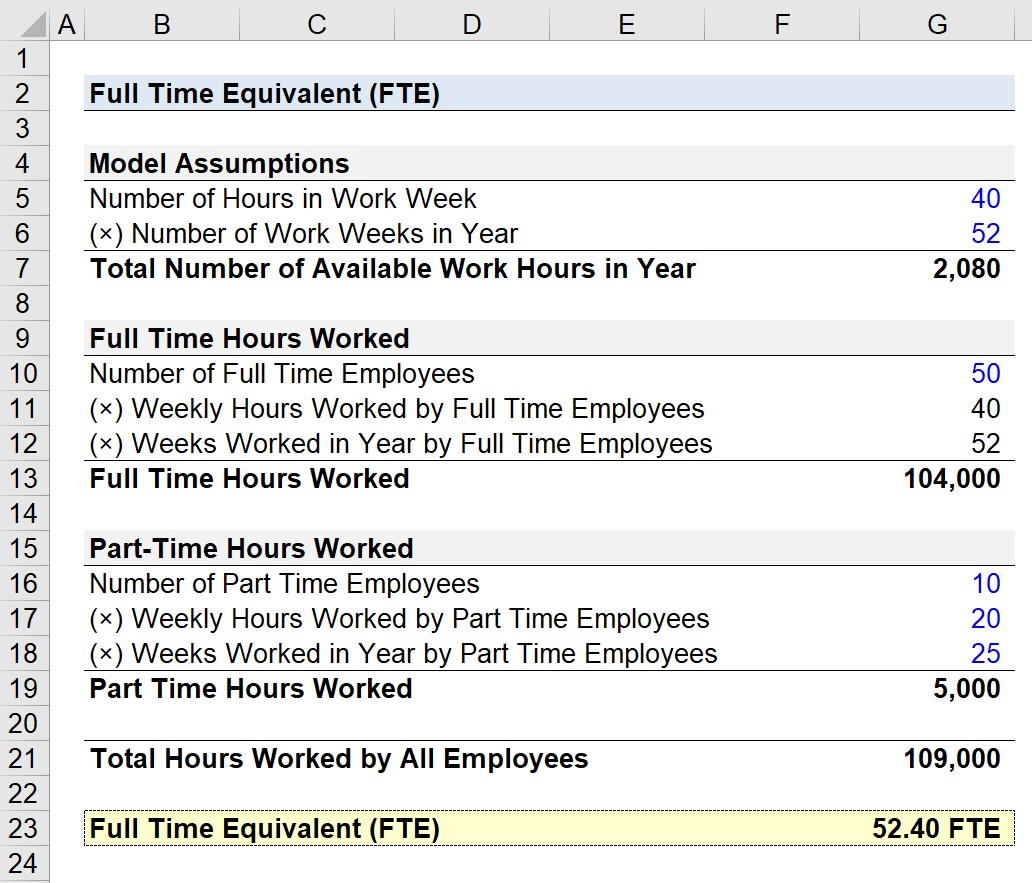
Calculating the full time equivalent (FTE) is a four-step process:
- Count the Number of Hours Worked by Part-Time Employees
- Count the Number of Hours Worked by Full-Time Employees
- Add the Number of Hours Worked by Both Part-Time and Full-Time Employees
- Divide the Total Hours Worked by All Employees by the Number of Available Full-Time Hours in a Year (2,080 Hours)
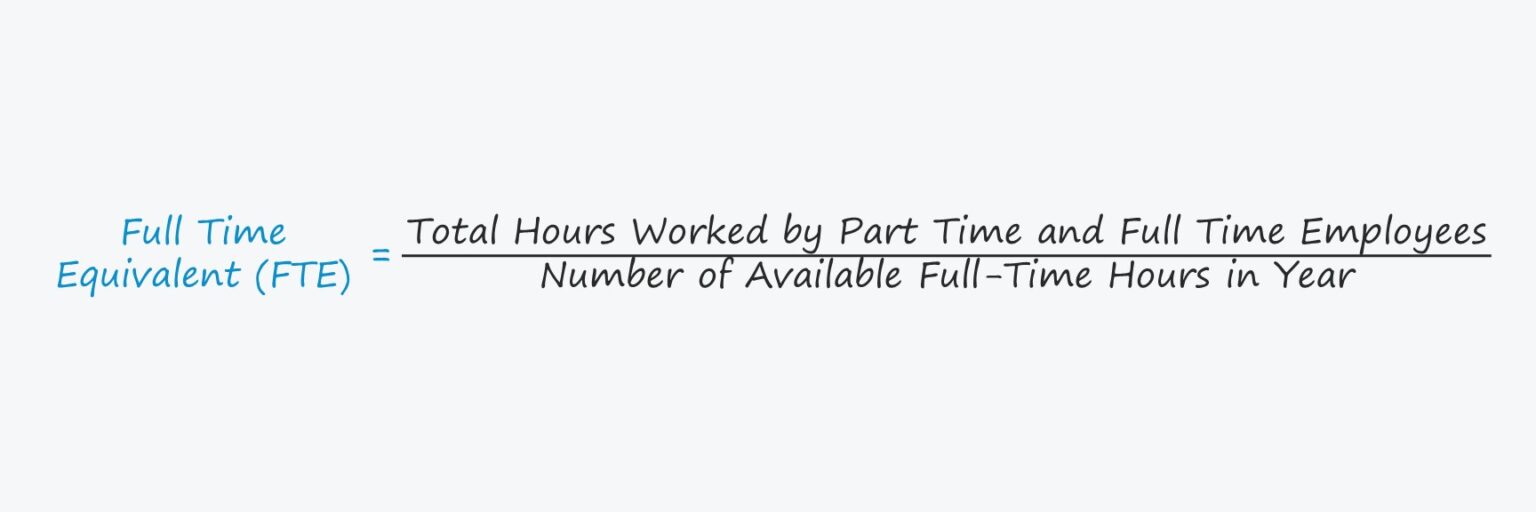
The formula for calculating the full time equivalent (FTE) on an annual basis is as follows.
Full-Time Equivalent (FTE) = Total Hours Worked by Part-Time and Full-Time Employees ÷ Number of Available Full-Time Hours in Year
The total hours worked is the sum of the number of hours worked by part-time and full-time employees, whereas the number of available full-time hours in a year is most frequently 2,080.







No comments yet.