In the field of project finance, risk management is all about identifying the risks associated with a project and the proper allocation of those risks among the different parties engaged.
The risks in project finance can be segmented into four categories: construction, operations, financing, and volume risk.
What are the Four Categories of Risk in Project Finance?
Project finance is about structuring a deal to manage risk among all the project participants, including lowering costs by negotiating interest rates.
Generally speaking, there are four main categories of risk:
The management of these individual risk categories must be divided up between the different participants in any given project. The departments negotiate who is responsible for this risk management, and it usually breaks down depending on how the risk impacts each department's profitability.
For a deeper dive into the different departments that are involved in structuring a project finance project, we've broken down and explained the career paths you can take within the project finance field.
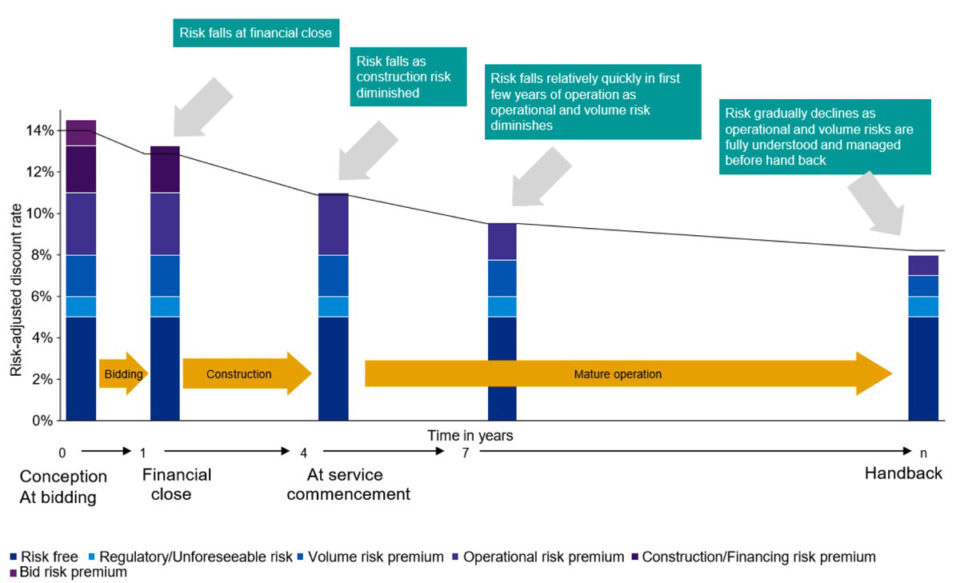
As the project progresses, the amount and type of risk can change. The image below is an example of how and why this happens over the lifetime of a project:
How to Measure Risk in Project Finance
In project finance, analysts use scenario analysis to determine and measure project risk and determine the various impacts from changes to key ratios and covenants. Because project finance deals often last for decades, a thorough assessment of risks is essential.
There are four primary types of scenarios that most projects fall into:
Conservative Case – assumes the worst case
Base Case – assumes an “as planned” case
Aggressive Case – assumes the most optimistic case
Break Even Case – assumes all SPV participants break even
In order to assess the risk profile, analysts will model these various cases to understand how the numbers look under each scenario.
How Scenario Impacts are Measured
Each scenario will result in a different impact on key project ratios and covenants:
Debt Service Cover Ratio (DSCR)
Loan Life Cover Ratio (LLCR)
Financing Covenant (debt/equity ratio)
The table below shows the typical average minimum ratios and covenants for each risk case:
Conservative Case
Base Case
Aggressive Case
Break Even Case
DSCR
1.16x
1.2x
1.3x
1.18x
LLCR
1.18x
1.3x
1.4x
1.2x
Covenants
60/40
70/30
80/20
65/35
Once the risks are identified, methods for protecting against these risks are then reflected in various interrelated contractual agreements:
Support Packages
Bonds that lenders can draw on in the case of construction and operational delays or non-performance
Additional standby financing in case of cost overruns
Contractual Structures
Remedy and cure for unforeseen events
Allow lenders or public authority to “step in” or take over a project if underperforming
Requirements for insurance agreements
Reserving Mechanisms
Reserve accounts that get funded with excess cash for future debt service and major maintenance costs
Requirements for minimum ratios
Cash lock-up if there is not enough money for the project
Hedging
Interest rates swaps and hedges for fluctuations in market rates
Foreign exchange hedges for fluctuations in currency
Legal Agreements for Projects
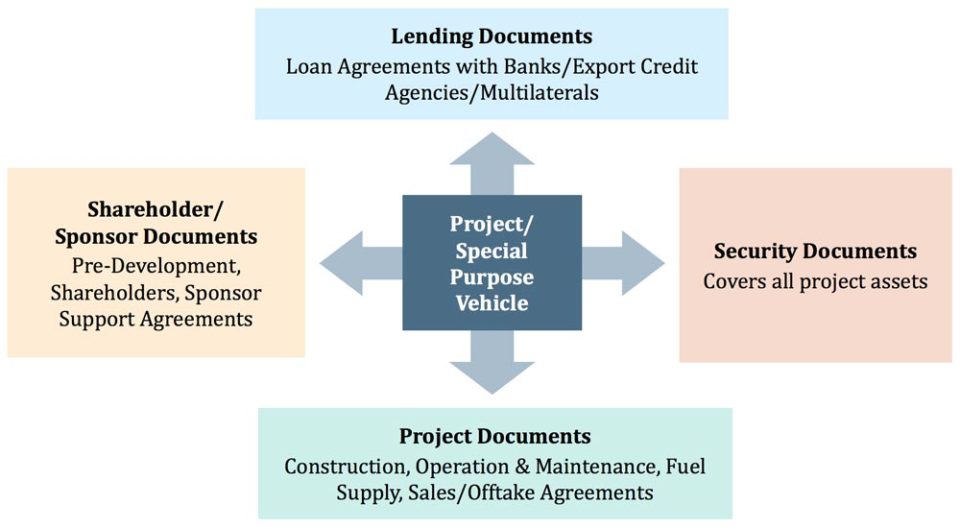
During the deal structuring stage, all of the parties involved in the project will construct a variety of agreements to structure cross-party relationships and to aid in managing risk.
The image below shows some examples of legal agreements that serve to mitigate risk:
Common Reasons Why Projects Fail
Even with the best of intentions and diligent planning, some project finance projects will fail. There are some common reasons why this may happen, as summarized below:
Investment Costs
Regulation and Legal Framework
Availability and Cost of Finance
Project Funding (Direct Subsidy from Public Authority)
High infrastructure, engineering, and construction costs
Few active engineering and construction firms
Long project durations
Lack of standardized risk allocation
Long government approval processes
Legislative constraints
Medium to high-risk ratings
Political and sovereign risks
Weak balance sheets
Investments not economically viable
Poor tax and tariff regulations
Socio-political pressures for competing needs for funding
The key to structuring a project finance deal is the identifying of all key risks associated with the project and the allocation of those risks among the various parties participating in the project.
Without a detailed analysis of these project risks at the beginning of the deal, project participants will not have a clear understanding of what obligations and liabilities they may be assuming in connection with the project and, therefore, will not be in a position to use appropriate risk mitigation strategies at the appropriate time. Considerable delays and expense can be incurred if problems arise when the project is under way and there will be arguments around who is responsible for such problems.
From the lenders’ perspective, any issues that arise from the project will have a direct impact to their financial returns. In general, the more risk that lenders are expected to assume in connection with a project, the greater the reward in terms of interest and fees they will expect to receive from the project. For example, if lenders feel the project will have an increased chance of construction delays, they will charge a higher interest rate for their loans.
Common Types of Project Risk
All project risks have a direct cost of financing impact. The following are typical project risks at various phases of the project:
Construction
Operations
Financing
Revenue
Planning/consents
Design
Technology
Ground conditions/Utilities
Protestor action
Construction price
Construction program
Interface
Performance
Operating cost
Operating performance
Maintenance cost/timing
Raw material cost
Insurance premiums
Interest rate
Inflation
FX exposure
Tax exposure
Output volume
Usage
Output price
Competition
Accidents
Force majeure
The task of identifying and analyzing risks in any project is conducted by all parties (financial, technical, and legal) and their advisers. Accountants, lawyers, engineers and other experts will all need to give their input and advice on the risks involved and how they might be managed. Only once the risks have been identified can lenders decide who should bear which risks and on what terms and at what price.
Continue Reading Below
Step-by-Step Online Course
The Ultimate Project Finance Modeling Package
Everything you need to build and interpret project finance models for a transaction. Learn project finance modeling, debt sizing mechanics, running upside/downside cases and more.





No comments yet.